






What did Metaxas reply to the Italians?
How did the Greeks react to the news of the war?
We have selected ten unknown elements of the Anniversary that confirm that Greeks can face situations with bravery.
1. Since August 1940 Greece had prepared its defensive line in Epirus and Western Macedonia.
2. Hitler’s Germany was opposed to Mussolini’s attack on Greece.
3. The Greek Prime Minister, Ioannis Metaxas, was informed by the Italian Ambassador in Athens, Grazzi, at 3:30 a.m., that the Italian government demands the unconditional surrender of parts of
of Greek territory, while giving an ultimatum until 6.00 a.m. Metaxas then replied without hesitation “Then we have war”.
4. The Italians attacked half an hour before the expiration of the ultimatum, i.e. at 5:30 in the morning.
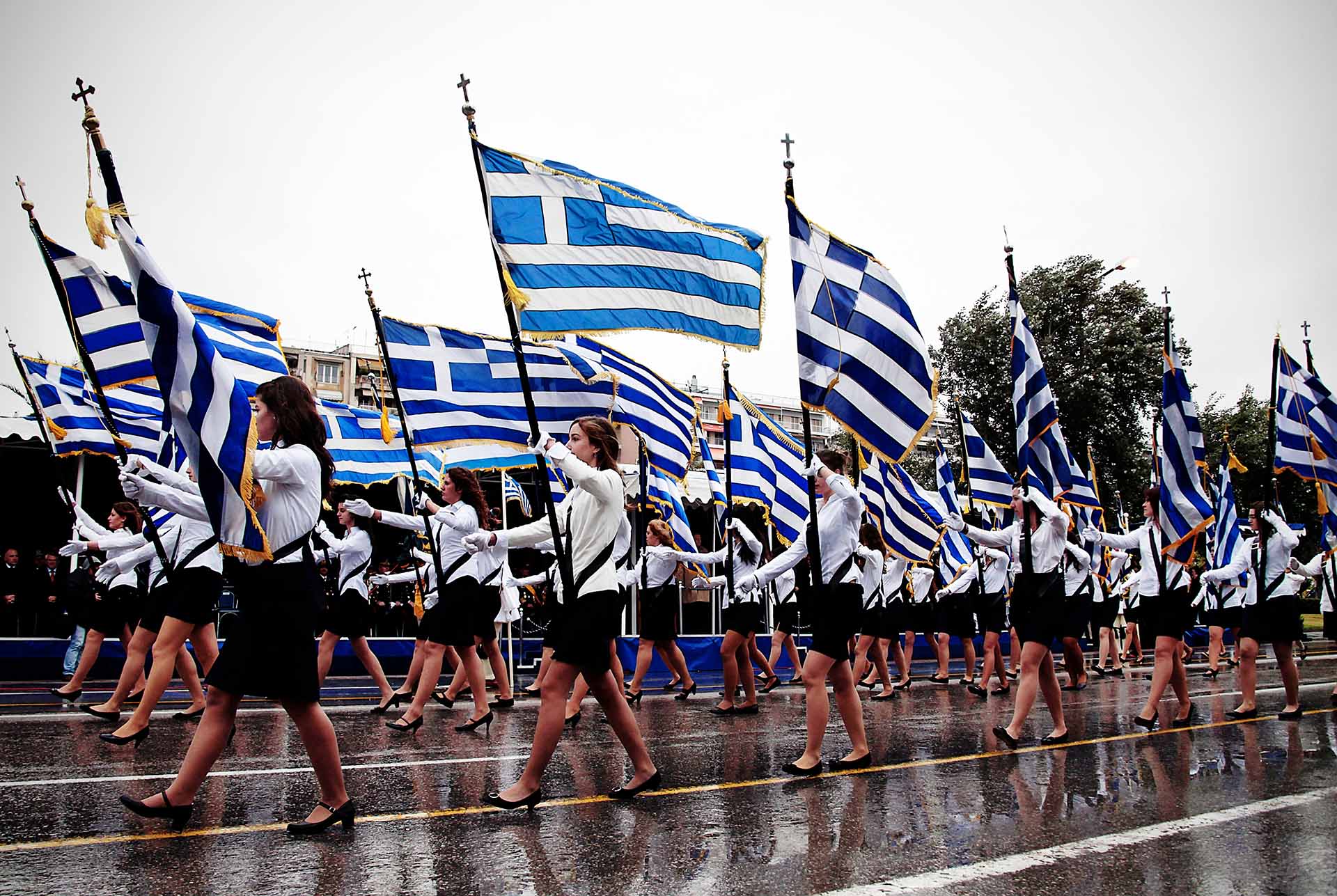
5. As soon as it dawned, the Greeks “poured into the streets” with enthusiasm and optimism for victory.
6.Fifteen days were enough for the Greek army to drive the Italian troops out of the country.
7. In the Battle of Pindos, an Italian division called “Julia” consisting of 10,800 soldiers was pitted against 2,500 Greek soldiers and the heroic women of the
Pindos, who drove them away.
8 Greek airmen shot down dozens of Italian warplanes every day. However, what has gone down in history as an act of bravery was that of Lieutenant Marinos Mitralexis, who, when he realised that he was running out of ammunition, rammed the enemy fighter and shot it down near Lagada. Then he landed in a field
that the Italian pilots had fallen with their parachutes and with the help of villagers arrested them.
9. The Greeks fought bravely from 28 October 1940 to 28 April 1941 against the Italians and then against the Germans. However, on 28 April 1941 the German
army entered Athens and the surrender of the capital and Piraeus took place.
10. The heroism of the Greeks in the Greco-Talian and Greco-German wars was recognised by both our allies and our opponents. The Japanese, allies of the Germans, in December 1940 were praising the bravery of the Greeks. A newspaper of the time said: “Our country [Japan], in which valour is highly honoured, is watching with admiration the struggle of the GREEKS in Albania and is so moved by it that, putting aside all other feelings, we exclaim ‘ZEET GREECE’.