




The timeless cultural relations and the contemporary literature of the Greek and Arab world
were explored at a Workshop at the University of Athens on the occasion of the 20th TIBT
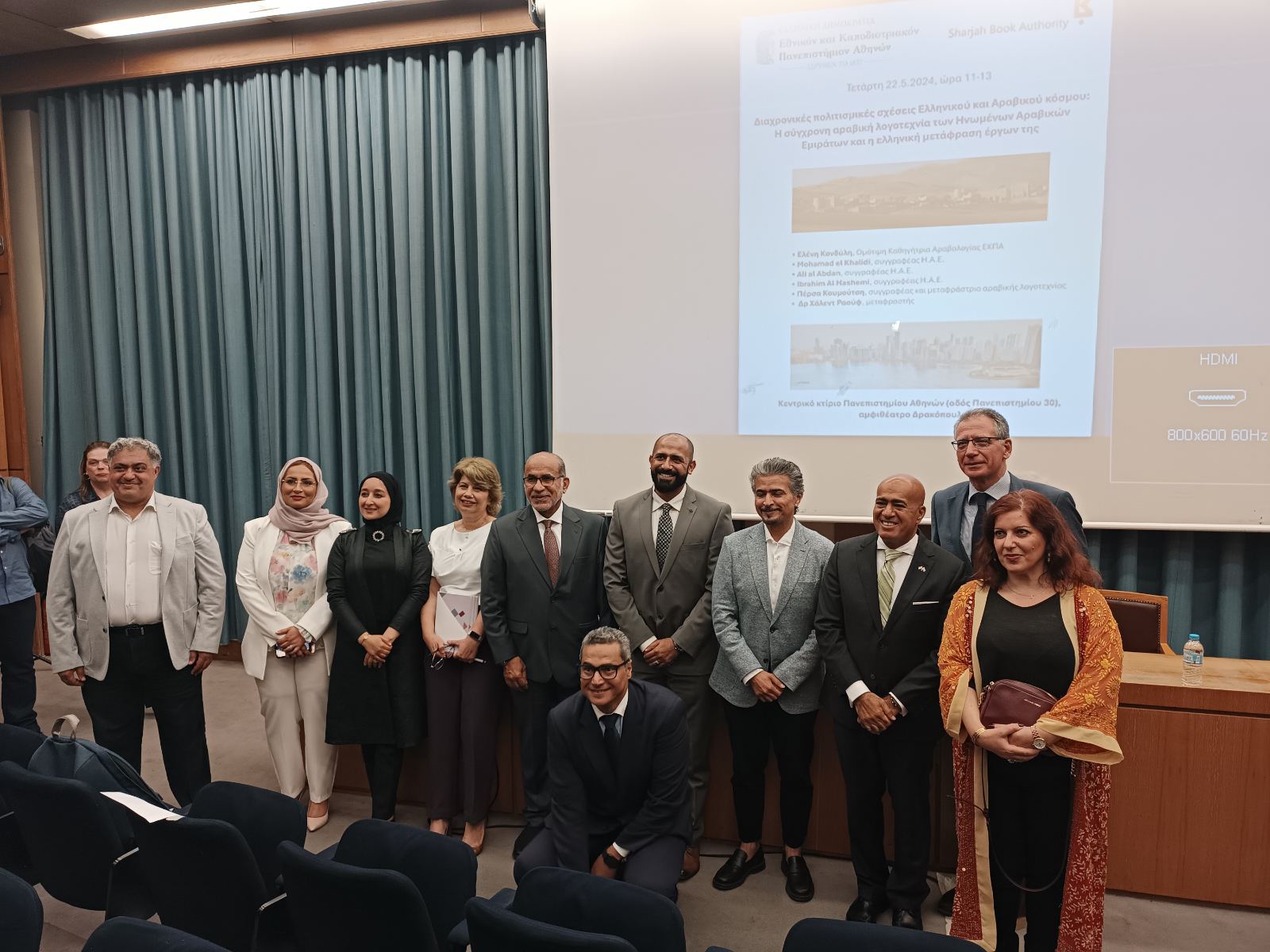
In the framework of the events of the 20th Thessaloniki International Book Fair, a one-day conference on the topic “Timeless cultural relations between the Greek and the Arab world: Contemporary Arabic Literature of the United Arab Emirates and the Greek translation of its works“, organized by the National & National Library of Greece. National and Kapodistrian University of Athens and the Sharjah Book Authority, with the collaboration of the Hellenic Foundation for Culture.
In her welcome address, Mrs. Eleni Kondyli, Professor Emeritus of Arabology at the University of Athens, pointed out that
t is the first time that the University of Athens opens its doors to the literature of the Arab world, while the Vice Rector of Academic International Relations and Communication, Ms. Sophia Papaioannou, in her address, she stressed that while intellectual ties have been strong since antiquity, modern Arabic literature was not known in the West, at least until the Nobel Prize to the writer Naguib Mahfouz, who became known and loved from the moment he was translated into Greek. “There is a need for more Greek translations. Thanks to the dedication and love of people involved in Arabic literature, Arab writers have been published and I hope in the future we will do more such activities so that Arabic literature in Greece is studied and attracts more people,” he said.
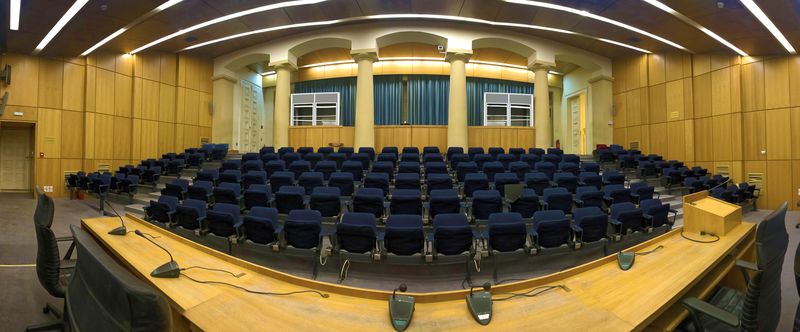
The Ambassador of HAE in Greece Dr Obaid Al Dhaheri in his address spoke about the honour of Sharjah being the first Arab Emirate to be honoured at the 20th TIF, which is not only a recognition but also an opportunity to deepen intellectual relations, mutual understanding, dialogue and cultural exchange. He said over 200 nationalities live in the UAE, their beliefs and religious faiths are respected by law and cross-cultural bridges are strong. Sharjah is the 3rd largest emirate and received the title of World Book Capital from UNESCO, following Athens in 2019, which strengthened the ties. He also spoke about the major events in Sarjah at the international book and children’s book fairs.
The President of the Hellenic Foundation for Culture, Mr. Nikos Koukis, spoke about the completion of all the events that took place in the framework of the TIF with great success, a significant share of which is due to the effort made by Sargasso. As he commented, “I hope that this opening to the Arab intellectual world will continue in the future and we certainly need to enrich our knowledge of contemporary Arabic literature.”
The coordinator of the TIF, Nopi Hadjigeorgiou, said that this conference closes the first cycle of cooperation with Sargasso, which started 3 years ago with the common desire for a dialogue on new foundations. “When Greece was the country of honour in Cairo, we discussed for the first time with the Sharjah Book Authority. At the TIF we got to know the richness of the culture of Sharjah, we met the 13 translated Arab writers, there was dialogue and interaction with Greek publishers, writers and translators. While we are linked by commercial and intellectual ties from antiquity, we do not know the modern culture. It is a wish, a hope, but also a conviction that this is only the beginning of new cultural exchanges. We got to know Arab writers thanks to the translations of Persa Kumouchi and Khaled Rauf, and we need to expand the pool of translators so that more works can be translated as an ark of knowledge and stable intercultural bridges. Let us create new training centres for translators. Just as we opened the exhibition programme at the AUTh, we are now closing it at the UAS, because universities are such important institutions of dialogue and culture, he stressed.
In her speech, Ms. Eleni Kondyli pointed out that the words university in Greek and Arabic have the same meaning. He spoke about the pluralism and multiculturalism in the Arab world and noted that so far we have been dealing with the western side of the Arabian Peninsula, but on the eastern side there is the sea and the Greek element, already since Alexander the Great and the ancient Greek cities in Arabia. The Arab world has always been in contact with Greece and with the Christian element there, while the modern UAE is open to all kinds of science and studies are currently being carried out on a Christian monastery that was discovered in 2021 near Dubai. Ms Kondyli also referred to the similarities in the myths, from the time of Luqman and Aesop, to the translations of the Koran and the Iliad and the importance of translation.
Mohamad el Khalidi, poet and psychiatrist, read excerpts from his collection of poems presented in translation at the TIF. “I know Greeks love poetry, but the last thing a writer thinks about when describing images and emotions in his language is how his work will be translated. So, I was very nervous about how my book would be in Greek and I felt very intimate knowing my translators in Greece.”
The writer Ali al Abdan spoke about the translation movement in Baghdad and pointed out that the logic of the Greek language made Arabs understand the meaning of the word term and be able to define things. To correct mistakes. He also drew parallels with musical staircases that were also translated into Arabic, and referred to the importance of the literary magazines that circulated between the two world wars.
The writer Ibrahim al Hashemi spoke about the dynamic presence of young Arab poets and the Cavafy Prize, while poems by Al Hashemi were read by the translator Persa Koumoutsis in automatic translation.
In the conclusions of the conference, Arabic literature translator and writer Persa Koumoutsis said that the awarding of the Nobel Prize to Naguib Mahfouz attracted a multitude of contemporary writers from the Arab world. “But we were not familiar with the literature of the Gulf, and we got an insight through Sarja’s participation in the TIF. When we got our hands on the writers’ texts for translation and presentation at the TIF, we were a little embarrassed, because although we are experienced translators and some of us have a relevant background, we felt that we were crossing an unexplored and attractive territory with literary texts, short stories, poems, novels, historical studies. We read modernist novels about human existence and isolation of everyday life, allegories about human frailties, we experienced the fresh female perspective, we saw myths and legends, we enjoyed poetry with different styles and themes, but with a common clarity of expression and literary depth that moved us greatly. Through these translations we made a journey and a mapping of Arabic literature. We were impressed by what we discovered and it opened a new door before us.”
Translator Khaled Rauf spoke about the revival of the author’s writing experience in a new language. As he said “You need the translator’s qualifications and experience in both the language and the two cultures, because the translator conveys culture and translating books is the best way to learn about a culture. The project was launched at the book fair in Sharjah last November and then we shared the 13 books with the translation team to translate them in 3-4 months, which was very challenging.” As Mr. Rauf, the translations will be donated to the NSCA, so that the books will be available to students.
The Thessaloniki International Book Fair is organized by the Hellenic Foundation for Culture in cooperation with the Greek publishers, TIF-HELEXPO, the Region of Central Macedonia, the Municipality of Thessaloniki, with the support of the Ministry of Culture and Sports. It is co-financed by the European Regional Development Fund, in the framework of the Operational Programme of Central Macedonia 2021-2027. TIBT is a member of the Forum of International Book Fairs and the European Network of Book Fairs ALDUS UP.
With the support of the General Secretariat for Hellenes Abroad and Public Diplomacy of the Ministry of Foreign Affairs.