






We welcome you to the new column of our magazine, which aims to introduce you to wine and other traditional products that
produced in our country. Together we will travel to Greek destinations and get to know the alcoholic and non-alcoholic beverages, foods of the
our homeland.
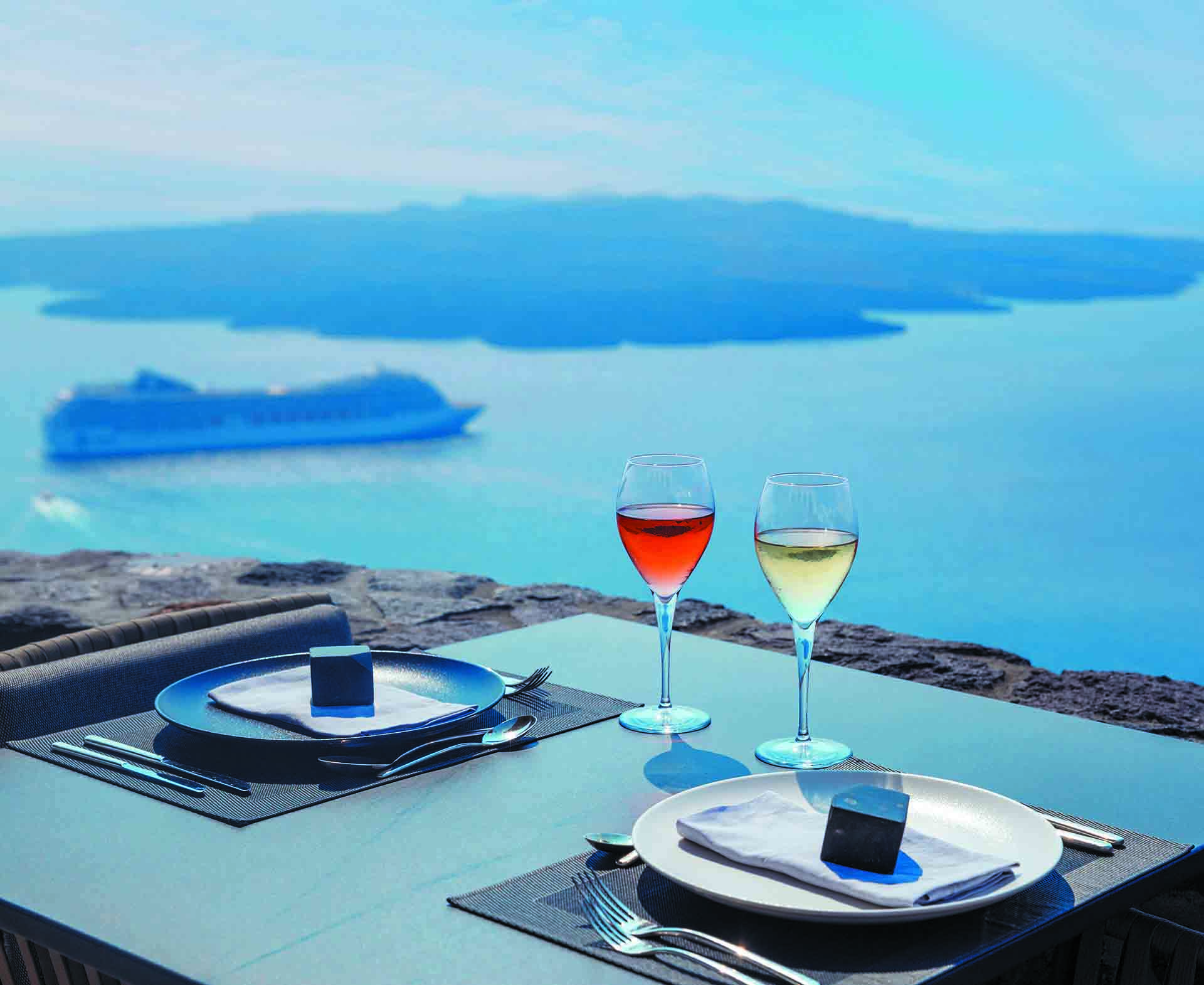
Whatever corner of Greece we look at, we will find wonderful vineyards and a history of many years of winemaking, the process of producing wine from the raw material grapes with the help of alcoholic fermentation, the conversion of must (must) into wine. Many different Greek varieties of wine will be found, which depending on the terroir of each region will give us corresponding results. An important role in the assessment, examination and analysis of wine is played by the organoleptic
tasting, where with the help of sensory instruments, we perceive the quality and character of the wine. By sight, therefore, we assess the colour of the wine (intensity and complexion), but also its appearance (clarity, fluidity, effervescence).The colour of the wine is due to the phenolic substances of the grape such as tannins and anthocyanins. It provides information on the polyphenol composition of the wine, the variety, the method of vinification, ageing, maturation and conservation.
With the sense of smell we perceive the aroma of the wine, its quality, its intensity and its character. We encounter an interaction of aromas that can be fruity, floral and ageing.
We distinguish the aroma of wine into primary (derived from the aromatic substances of the grape), secondary (occurs during alcoholic fermentation) and tertiary (comes from the aging and maturation of the wine). With taste we perceive sweet, sour, salty and bitter. Alcohol, sugars, acids, esters, salts and phenolic compounds form the taste of the wine. The taste and balance in wine should be based on the sweetening taste on the one hand and on the other hand on the sour taste (acids) and bitter taste (tannins) sweet taste, sour taste and bitter taste. We appreciate the intensity of the taste, its “body” and its duration. In addition to the aroma of the nose, add the aroma of the mouth, which we perceive its purity, type and duration. Finally, during the organoleptic tasting of the wine we choose the special glass
test and we try to achieve the most favourable conditions (light, temperature, noise, climatic conditions).
Enjoy!
Bibliography:
– Hugh Johnson’s, How to enjoy wine
(Simon & Schuster Inc)
– Initiation a la degustation des vin 1976 (I.T.V.)
– Steven Spurrier, Mixhel Dova3, La degustation
1984 (Borda)
– Peynand E, la gout du vin, 1981 (Dunot)
– Argh. Tsakiri, Oenology (Psichalou ed.)
From a connoisseur,
Antigoni Karamvali, Oenologist