







- Greece has been expanding its global culinary presence. What are the Ministry’s priorities for strengthening the international reach of Greek agricultural products over the next two years? Which markets are at the center of your strategy?
Showcasing Greece’s agricultural treasures to the world has long been a central priority as a necessary path toward the sustainable growth of our primary sector and the prosperity of our farmers. Greek products carry a rare blend of quality, identity, and heritage, and this is precisely what we aim to elevate on the global stage.
Over the next two years, our strategy is shaped around three pillars:
– First, a more structured and assertive presence in major markets where Greece can secure a stronger position – notably the United States, the Middle East, and Asia.
– Second, empowering both small-scale producers and larger export-driven enterprises through existing programs and new financial tools that will come into force from 2026 onward.
– And third, presenting Greece with a unified voice at international exhibitions and promotion events, working closely with organizations such as Enterprise Greece to build a coherent, recognizable national brand.
Our ambition is clear: to ensure that Greek products abroad project quality, consistency, and authenticity – the qualities that define us.
“Over the next two years, we are focusing our efforts on three strategic pillars: […]
the targeted and well-structured promotion of our products in major markets where Greece has considerable potential
for further penetration, such as the United States,
the Middle East, and Asia.”
- Greece’s PDO and PGI products are among its most distinctive assets. How are you working to protect, certify, and strengthen their international profile?
PDO and PGI products are living expressions of Greece’s identity. Our country has so far registered 121 such names, placing Greece among the leaders within the European Union. Each product is a distilled story of its land, its people, and its traditions.
Our strategy unfolds in three directions:
– We strengthen certification and control mechanisms, ensuring a modern and responsive framework capable of protecting product identity with credibility and speed.
– We invest in elevating international visibility, taking a proactive role in EU-level initiatives that seek to extend Geographical Indication protection beyond Europe’s borders.
– And we support collective producer initiatives, because authenticity thrives when local communities organize, collaborate, and champion the character of their region.
Today’s consumers seek genuineness. Greek products, rooted in place, history, and excellence, are uniquely positioned to answer that call.
- Climate change is reshaping agricultural landscapes worldwide. What are the key tools of adaptation you are prioritizing, and how is ELGA’s role evolving?
Climate change is a lived reality that affects our farmers every day. Extreme events, from prolonged droughts to floods and heatwaves, are redefining the conditions of cultivation.
Our response is comprehensive and forward-looking. We are investing in water-saving technologies and the modernization of irrigation systems, enabling more precise and sustainable water use. We are accelerating the adoption of precision agriculture, using sensors and satellite data to optimize inputs and reduce environmental pressures.
“We are strengthening our control and certification mechanisms through a modern,
flexible, and highly effective system that enables swift interventions whenever necessary,
ensuring that the identity of our products is consistently protected.”
Together with institutions like ELGO-DIMITRA, we promote resilient cultivation practices: new varieties adapted to local climates and improved management techniques that help farmers withstand uncertainty.
ELGA, our national agricultural insurance organization, is also entering a new era. The State now covers its operating costs, ensuring that farmers’ contributions go directly to compensations. And when major disasters strike, the national budget reinforces ELGA’s capacity to respond. Crucially, the compensation process itself has been redesigned: assessments and payouts are now delivered far more quickly and in a single instalment.
Behind all these reforms lies the conviction that farmers must feel protected, especially when facing the hardest moments of loss.
- Innovation is transforming agriculture globally. How is Greece supporting technological and practical innovation to enhance competitiveness?
Innovation is the cornerstone of a resilient primary sector, and this begins with fostering a deeper collaboration among farmers, researchers, and private enterprises. Through programs such as the Operational Groups, research findings are tested directly in the field, where new approaches are refined, from water management to input optimization and locally adapted varieties.
We actively encourage the spread of smart-farming tools, supported by geospatial intelligence and automated systems that reduce costs, elevate quality, and empower farmers with real-time decision-making.
And through targeted investment schemes and Improvement Plans, farms of all sizes can modernize infrastructure, reduce their environmental footprint, and better position themselves in demanding markets.
A modern agricultural landscape must be both technologically equipped and human-centered. This is precisely where we are investing.
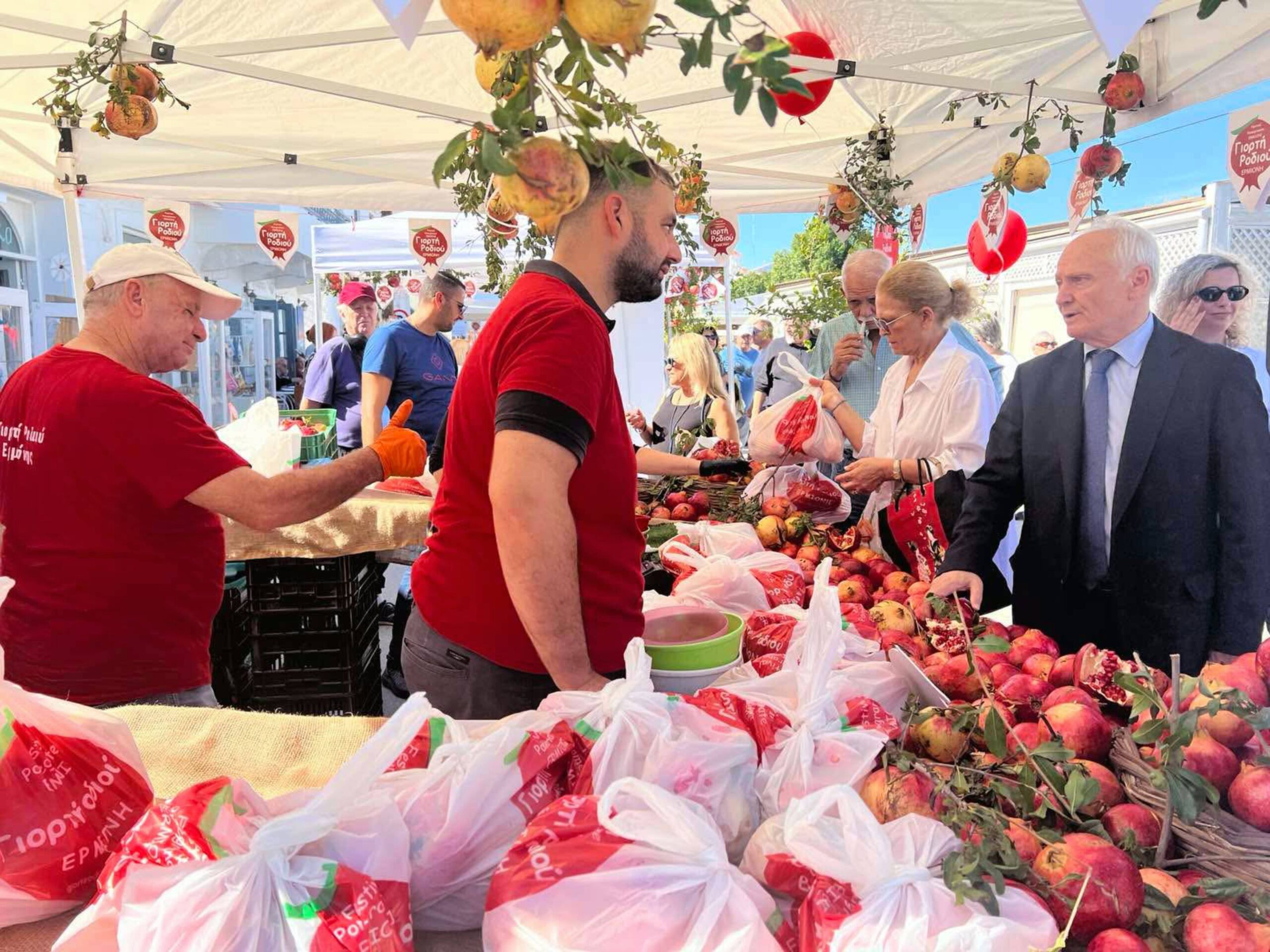
- The intersection of gastronomy and tourism is a powerful opportunity for Greece. How can thematic gastronomy become a tool of cultural diplomacy?
Greece is a country where landscape, culture, cuisine, and hospitality naturally intertwine. This seamless narrative is one of our greatest strengths — and one that resonates deeply with travelers.
In recent years, we have worked systematically to build meaningful synergies between tourism and local production. Beyond the well-established wine routes, we have now opened the way for visitable olive mills, while continually expanding initiatives that showcase each region’s gastronomic richness.
“ELGA is assuming a clearer and more robust role: […] its operating expenses are now covered by the state budget,
allowing the insurance premiums paid by producers to be directed exclusively toward compensations.”
The essence is simple: When a traveler tastes Greek olive oil, wine, cheese, fresh fruit, honey, or the many unique products of each region, they become lifelong ambassadors of our country.
This is why we encourage hotels, restaurants, and hospitality businesses to highlight even more Greek ingredients, especially those of the area in which they operate. Gastronomy is not just flavor; it is a form of cultural diplomacy, shaping perceptions, strengthening communities, and enhancing Greece’s international image.
- What new support tools will be introduced in 2026, and how will you ensure that both small and large producers benefit fairly?
In the coming years, a broad array of support mechanisms will be activated to serve farmers of every scale. Our guiding principles are fairness, transparency, and effective use of public resources.
Within the new CAP framework, more than €2 billion in programs are already being implemented, from Young Farmer support to Improvement Plans for infrastructure and equipment, to processing and value-adding initiatives, to essential irrigation and land-reclamation works, to rural road projects that improve everyday accessibility, and the LEADER programs that support rural entrepreneurship.
Beginning in 2026, additional instruments will be introduced. These include financing through the Hellenic Development Bank, targeted climate-risk prevention investments, and new training and upskilling actions for farmers embracing digital and climate-smart practices.
A crucial pillar of this transformation is the reform of OPEKEPE, our payments authority. Its transition to a new framework rooted in transparency and sound governance ensures that funds reach those who truly cultivate the land.
- What are the sector’s most pressing structural challenges, and which one will show tangible progress first?
Three challenges stand out.
First, reforming the payments system and ensuring that support reaches producers promptly, fairly, and transparently. Considerable progress has already been made as OPEKEPE transitions into its new governance structure under AADE, Greece’s Independent Authority for Public Revenue.
Second, adapting to shifting climatic conditions with more resilient crops and smarter natural-resource management. In regions such as Thessaly, new water-management initiatives are already under way and will be pivotal in the years ahead.
Third, accelerating the adoption of innovative technologies. Smart farming reduces costs, improves quality, and contributes meaningfully to farmers’ incomes.
We are advancing on all three fronts with determination. Yet the area where results will likely be felt first is the payments system, where recent reforms are already improving farmers’ daily reality.
“PDO and PGI products are not merely goods; they embody the identity, history,
and cultural heritage of each region — and Greece is committed to protecting them
with integrity and showcasing them on the global stage.”
- Greece is increasingly recognized as a global culinary destination. What message would you like to share with international travelers, and what is the “promise of quality” you want Greece to embody worldwide?
Our message is simple, yet profound: Greece offers a life experience – authentic, generous, unforgettable.
Greek cuisine is an experience of heritage. Every flavor is connected to a place, a tradition, a family carrying the memory of centuries.
What a traveler experiences in Greece stays with them long after the journey ends. They return home remembering the flavors they discovered, the landscapes they explored, the people who welcomed them. And they begin planning their next visit!
Our promise is to protect and elevate this unique value with respect, responsibility, and genuine care, guided by the timeless spirit of philoxenia, Greek hospitality.
- Two destinations that have left the deepest mark on you — one in Greece and one abroad — and the gastronomic experience that captures the essence of each?
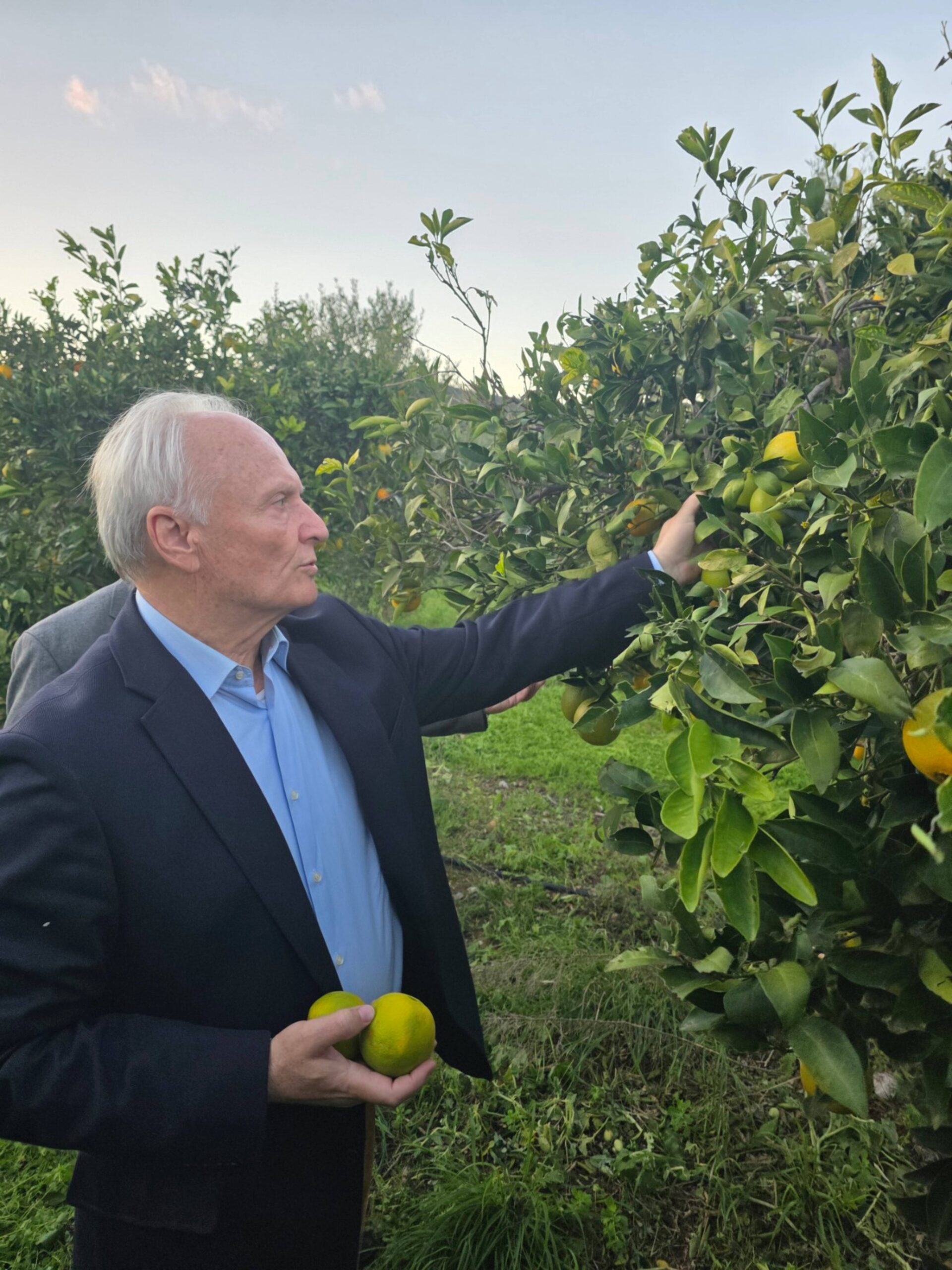
Greece has a remarkable way of enchanting you wherever you go – and of course, wherever you go, you know you will eat well. But the first and original destination, the one that shapes us all, is childhood. I inevitably return to the flavors of Argolida, where I grew up: fresh oranges and vegetables, the everyday and festive dishes my mother prepared. A ripe tomato from our garden, quartered and sprinkled with oregano, salt, and pure olive oil, a handful of olives and homemade bread, and gemista, stuffed vegetables slow-cooked in our wood-fired oven — these are the deep imprint of memory against which every later culinary experience is inevitably measured.
This sense of freshness, creativity, tradition, and warmth is exactly what we want to offer the millions of visitors who come to Greece each year. And judging from both expert reviews and travelers’ impressions, we seem to be doing quite well.
As for abroad, I would choose my recent trip to Córdoba for a meeting of the International Olive Council. In its magnificent old town where Spanish, Islamic, and Jewish influences intertwine I had the pleasure of tasting local cuisine and traditional dishes such as Rabo de Toro, a slow-cooked stew that beautifully reflects the region’s identity, history, and cultural layers.
In the end, the essence is universal: quality, character, authenticity. This is what travelers seek, and this is what we are determined to safeguard in Greece’s extraordinary agricultural products.