






INTERVIEW WITH THE STATE SECRETARY FOR DEVELOPMENT AND INVESTMENT, MR. CHRISTOS DIMA.
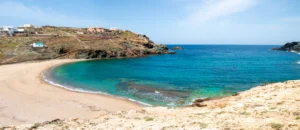
For specific actions and programs to be implemented in the next period and the objectives of the Ministry to stimulate start-up and youth entrepreneurship talks to GR Traveller, the Deputy Minister of Development & Investments, Mr. Christos Dimas and invites us to his place of origin, Corinthia, to discover areas with excellent
beauty throughout the year.

What actions and activities do you plan to stimulate and facilitate youth and start-up entrepreneurship in the coming years?
Our aim is to support the start-up entrepreneurship ecosystem in practice. For this reason, we are setting up an online register of start-ups, in order to record the ecosystem and make it easier and more effective to support its development. It is a platform that each startup will manage and manage the
itself and will have an interest in joining it, so that it can benefit from the specialised incentives offered by the State. In this way, the state will have a real-time, very concrete picture of the fiscal cost of its start-up policies, which until now remains blurred and makes it difficult to provide more incentives in a difficult economic climate. It will be a special business through the “Research-Create-Innovate” 2nd cycle Action, the launch of a complementary call (2nd cycle) for the “Seal of Excellence” and the reward of patenting. In addition, we have set as one of our priorities in the Ministry of Development and Investment to improve the operating model of the Development Bank brought in by the previous government. We want this agency to operate in line with international best practices and to have the independence it needs to implement the government’s development plan in terms of investment,
especially in the financing of small and medium-sized enterprises. Greece lacks a properly designed development banking institution which will have as its main concern investment and not deposits. Finally, I will refer to the joint announcement with the General Secretariat for Research and Technology of the Innovation Clusters Action. The aim of the Action is to strengthen integrated structures and/or existing clusters. The structures will be implemented by bodies with
experience in supporting innovation and healthy entrepreneurship. The Action focuses on 8 thematic areas (Agri-Food, Life Sciences, Information Technologies, Energy, Climate Change, Logistics, Materials-Manufacturing and Culture-Tourism-Cultural and Creative Industries). an easy process, which will take into account the specificities of the form of the startup companies, so that they can prove at national and international level that they are part of the startup field, without a physical presence.
entrepreneurship. In addition, Greece must and must acquire modern infrastructure to attract investors who will spend money on research and innovation, as well as attractive incentives for synergies with research centres. Based on this design we are working on the creation of two innovation centres, i.e. physical spaces, one
in Athens and one in Thessaloniki, where research centres, companies and startuppers will collaborate to create substantial innovation synergies.
Will there be NSRF programmes in 2020 that will target young entrepreneurs and if so, which sectors of the economy will they focus on?
As we are at the end of the 2014-2020 Programming Period, there is limited financial and time flexibility for programmes exclusively targeted at young entrepreneurs such as the “Start-up Entrepreneurship” Action. At the same time, we are examining the possibility, financially and in terms of time, of supporting more innovative businesses through the “Research-Create-Innovate” 2nd cycle, the announcement of a supplementary call (2nd cycle) for the “Seal of Excellence” and the rewarding of patent registration. In addition, we have set as one of our priorities in the Ministry of Development and Investment to improve the operating model of the Development Bank brought in by the previous government. We want this agency to operate according to international best practices and to have the independence it needs to implement the government’s development plan in terms of investment, especially in financing small and medium-sized enterprises. Greece lacks a properly designed development banking institution which will have as its main concern investment and not deposits. Finally, I will refer to the joint announcement with the General Secretariat for Research and Technology of the Innovation Clusters Action. The aim of the Action is to strengthen integrated structures and/or existing clusters. The structures will be implemented by organisations with experience in supporting innovation and healthy entrepreneurship. The Action focuses on 8 thematic areas (Agri-Food, Life Sciences, Information Technologies, Energy, Climate Change, Logistics, Materials and Manufacturing and Culture-Tourism-Cultural and Creative Industries).

How do you plan to address the major weaknesses of the Greek innovation system and strengthen research? Will there be support for research projects in cooperation with other ministries, such as education, tourism, etc.?
As the Prime Minister has stressed, innovation has a central role in the new development model of the country, in order to face challenges such as Climate Change, the competitiveness of the economy, the 4th Industrial Revolution, National Security, the digital transformation of the country, Health Sciences and the Energy Transition. The aim is to mobilise all national forces and use Research and Innovation as a vehicle to strengthen the country’s international position. The first step that we have taken based on this planning is the establishment of the National Council for Research, Technology, Technology and Innovation (NSETEK) which has the competence to close the gap between Research and Innovation. The problem we have had so far is that despite the fact that we have had excellent research results, they have not been able to be transformed into innovative products and services. ESETEK will act as the highest advisory body to the State in the formulation of the National Strategy for Research and Innovation. This body will bring together renowned researchers, academics, but also people from the market and the innovation ecosystem. There are also efforts to cooperate with other institutions, for example, we are in communication with the Ministry of National Defence and the Research Centres of the Hellenic Army to expand the possibility of synergy between the two Ministries in order to link the part of the Research and Technology produced in the country with National Defence and Security. Our main aim is for the Research produced in research centres and universities to have a greater impact on the economy and society. We aspire to make Greece a leader in the field of Innovation in the Balkans and South-Eastern Europe, but we know that we still have a long way to go before we reach this point.
You mentioned in your statement that your goal is to return the young Greeks who left abroad during the crisis. How do you plan to achieve this objective in your areas of competence (research and technology)?
Indeed, I have repeatedly stressed that the exodus of thousands of young people during the economic crisis is a great blow to the country. Repatriating them and reversing the brain drain are immediate priorities and a big gamble for the Government. However, in order to reverse the phenomenon, bold and targeted moves are needed to create incentives for their return. I can tell you with certainty that attracting companies, through incentives, to invest in Research and Development (R and D) would result in the creation of new, skilled and well-paid jobs in sectors such as Life Sciences, Agri-Food, Cutting Edge Technologies, National Defence, Energy, Climate Change studies, etc.
What is your message to GRTraveller readers for the new year?
Greece is changing. Our ambition is that every day is better than the previous one and that this has an impact on the daily lives of citizens. As far as the tourism sector is concerned, our goal is for tourism to not be limited exclusively to the summer months but to spread during the winter season as well, since the infrastructure and the possibilities exist. Already with the new Development Bill and the creation of a more business-friendly environment, we have attracted the interest of very large companies interested in investing in the tourism sector, resulting in thousands of new jobs. In conclusion, I would like to invite you to visit Corinthia, which is ideal for summer and winter tourism as it combines both the coastal beauty and the wild mountainous side in a unique way, to guide you to areas of outstanding beauty, throughout the year, which are discovered in recent years by more and more travelers.