






Interview with the president of the Association “Brotherhood of the Procopius of Saint John the Russian”,
Athens-Piraeus & surroundings, Dr. Vivi Sarantidou
This year’s anniversary calendar of the Association “Brotherhood of Prokopies Hosios Ioannis the Russian”, dedicated to the Revolution of 1821, reveals to us the unknown history of the Asia Minor people, who fought alongside the Peloponnesians, the Stereoelladians and the rest of the Greeks for the longed-for freedom.
Dr. Vivi Sarantidou, president of the Association, gives us more information about the unknown contribution of the Asia Minor people in the Struggle for Freedom and explains why the banner of the Revolution was not raised in Asia Minor.

First of all, tell us a few words about the cover of this year’s calendar, which made a special impression on us
Our cover depicts an engagement box (wedding box) made of 19th-20th century gold-plated silver. century that was given as a gift to the guests. It is one of the many remarkable exhibits of the Museum of Asia Minor Culture founded by the Board of the Holy Shrine of Saint John of Russia in Neo Prokopi, Evia. Sacred relics and objects brought to Greece by the inhabitants of Prokopi during the exchange of populations are exhibited there.
In its pages, however, you reveal an unknown aspect of the Revolution of 1821. Tell us more about it and why did you choose this particular theme?
Our Association annually prints calendars that are made available to its members and friends. This year, it is dedicated to the 200th anniversary of the Revolution, so it is an anniversary event.
”The Revolution is presented in all references as an event that concerned the main body of Greece (Peloponnese, Central Greece, the islands) and ignores the participation of the Asia Minor people and their role in the Struggle of the Nation”.
The revolution was a nationwide uprising of the entire Greeks and the Greeks of Asia Minor could not be left out of it.
Why didn’t the Asia Minor people revolt alongside mainland Greece?
The answer to the legitimate question why the Asia Minor people did not revolt is multi-level. The original plan of Alexander Ypsilantis was simultaneously to start revolutionary movements in the coastal cities of Asia Minor and also to burn the Turkish fleet in Constantinople. This plan, however, became known to the Turks, resulting in the imprisonment and beheading of the leaders of the project.
”
It became clear that any attempt at a parallel revolt in Asia Minor was doomed to be suppressed and lead to the extermination of the Greeks there.”
Apart from the fear of reprisals, we must also take into account the geopolitical position of the Hellenism of Asia Minor which did not allow the development of a revolutionary movement. The geographical distance from mainland Greece as well as their minority within the Turkish element are some of the reasons why the parallel revolution was impossible.
Did the declaration of the Revolution affect the Greeks of Asia Minor? Was there any kind of retaliation from the Turks?
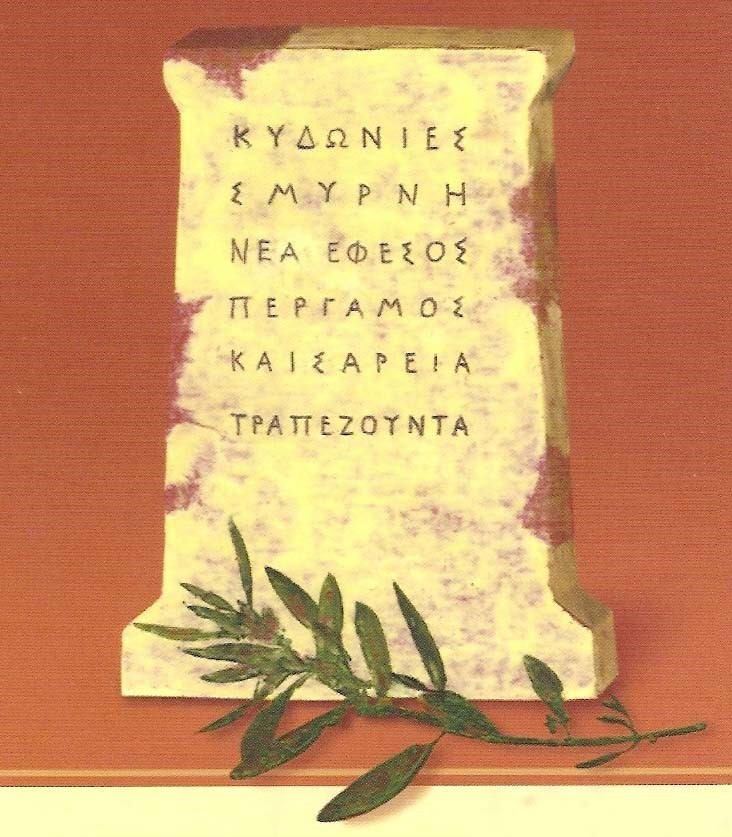
The declaration of the Revolution became the occasion for persecution and massacres against Greeks throughout Asia Minor. Typical examples are the holocaust of Kydonia (today’s Aivali), the murderous persecutions in Smyrna, the massacres and looting in Nea Ephesus (today’s Kusadasi) and the hanging of Patriarch Gregory V in the summer of 1821. The wave of these persecutions contributed to the strengthening of the national consciousness of all the Roms, especially those who lived in the interior of Asia Minor and Cappadocia.
Nevertheless, did the Asia Minor people support the 1821 Revolution? What was their essential contribution?
The Asia Minor people were not only victims of the vengeful mania of the Turks. Despite the objective difficulties, they had a remarkable active participation in the revolution with the voluntary enlistment of thousands of Asia Minor citizens who participated in the battles alongside their compatriots as well as the initiation of many into the Society of Friends. The Society of Friends spread to Constantinople, Smyrna, Cydonia, Cappadocia and Pontos. In Cappadocia there is information that the metropolitan of Caesarea, Paisios of Caesarea, and his great-grandfather Seraphim Rizou, from Sinaso, who was hanged by the Turks in Prusa because he was a member of the Society of Friends, were both Friends. Apart from those who were initiated into the Society of Friends, there are references to the material and financial help of the Asia Minor people in support of the causes of the Struggle.
”Also, very few people know that the gold-embroidered cloth used as the banner of the revolution, depicting the Assumption of the Virgin Mary, was embroidered in Smyrna.”
It is also not known that the day after the revolution seventeen women in Caesarea, Cappadocia, fell into the Sarro River to avoid falling into the hands of the Turks. The most official contribution of the Asia Minor fighters was the formation of the Ionian Flank (1826-1828), a military corps consisting of Asia Minor fighters led by the Smyrnaean Ioannis Karoglou, who fought in the Peloponnese, Central Greece and Chios.
What are the historical sources of this information?
It is true that there are not enough sources mainly because of the fear of the Asia Minor people to make their actions public. The information is drawn from sources in Greece and from some private memoirs. The Foundation of the Hellenic World published in 2010 the book “Asia Minor in the Revolution of 1821: The Contribution of Asia Minor to the National Struggle” by T. Salquitzoglou and this is the source of our information.
”In the era of globalisation it is very easy for a small people to lose their identity and a people who forget their history, slowly but surely disappear.”
How important do you consider it for the Asia Minor people and for all Greeks to keep our historical memory alive?
The Asia Minor refugees could take few things with them. But they brought to Greece their memories, their hard work and creativity, values that helped them to progress and at the same time helped the development of Greece. We consider it our duty and a minimum tribute to the generation that suffered unjustly, not to allow oblivion and to preserve the customs, traditions and values of our ancestors from the “lost homelands” in order to ensure the conditions for a better future. In the age of globalisation it is very easy for a small people to lose their identity and a people who forget their history slowly but surely disappear. But it is not possible for Greece with so much civilization to get lost in this globalization maelstrom.
A few words about the Association “Brotherhood of the Procopius of Saint John the Russian” of Athens and its surroundings
It was the first Asia Minor Association in Greece. It was founded on 25 May 1924 by “uprooted” Greeks of Prokopio in Cappadocia, with the aim of solidarity and mutual aid for their settlement in their new homeland. The Prokopians, through the church, maintained their national identity and consciousness. The name of the Association also refers to St. John the Russian, who lived and sanctified in Prokopi. The Prokopians secretly transferred his skeleton from the Turks and built a temple in his honour in Neo Prokopi in Evia. His memory is celebrated every year on 27 May
. 

@prokopi1924
 prokopi1924@gmail.com