






“[The Greeks] … relied on the Christian religion and the deep-rooted remnants of the Creed of Ancient Greece to survive. These elements formed the historical continuity of the Greeks. Elements that are […] alive in the customs and traditions […]. The heritage between the centuries.” Dora Stratou

Twenty green villages hidden in the mountains of Pindos, between Karditsa, Trikala, Arta and Evritania, reveal their customs for Lambri. In an idyllic spring landscape with wild beauty, running waters, wild flowers and green slopes with fir, cedar and oak trees. Customs such as the lantern keep alive the tradition that starts from the ancient Greek worship of Adonis, passes to the Christian worship and reaches up to today intact.
The custom of the lantern is a large fire that is lit in the churchyard on the evening of the Resurrection and its height often reaches five meters. In the old days, the children of each village competed to see who could make the biggest one. When the fire was dying down, children used to jump over the thraca for health but mainly for fun.
For the old Argithians, Easter was a whole “rite” that started on Monday and included feverish preparations, such as cleaning the houses and the church, dyeing the eggs on Thursday, preparing the slaughter, making the lampshade and the yoghurt on Saturday, as well as cutting the cedar wood for the custom of the lantern. Everyone participated, men and women, young people and children, each taking on his or her own role.
M. Thursday they made the “megalopeptisia”, amulets and charms for people and animals. They painted the eggs red with elaborate designs while those who were in mourning painted them black. On the balconies and windows of the houses they would spread the girls’ dowries to get married.
When it was dawn M. Friday, the children sang carols and filled their mourning basket with money, eggs, nuts and sweets from the villagers’ fillets. No one was sitting at a table. They ate the fasting “fake”, with grated greens, onions and corn flour as well as boiled dried fruit.
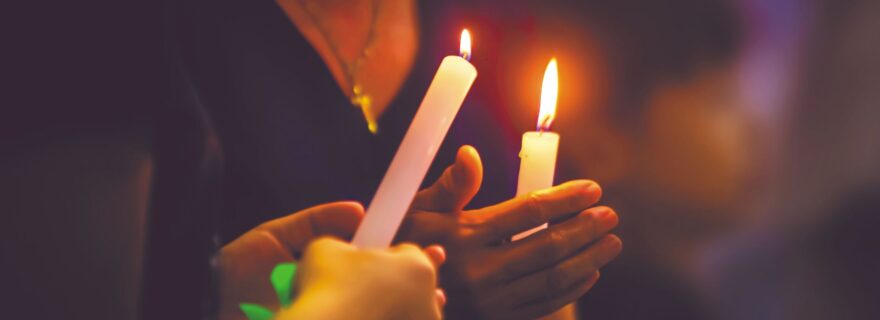
They lived it, however, in its true dimension, as a religious celebration near the church. They gathered in groups and with only the illumination of special torches, made of wood and cloths soaked with resin, they proceeded along the rough paths leading to their churches. There they listened to the 12 Gospels and followed the procession of the Epitaph, where they passed underneath for good and took a few flowers to keep in their iconostasis. There they all chanted together “Christ is Risen” and lit the candles with the Resurrection Light.

With it, they would cross the entrance of the house and light the candle. The whole family would gather around him to eat Magiritsa and crack eggs.
The Lambria feast started early, with the lamb roasting on the spit, the pies steaming in the wood-fired oven and the treats with raki. The village square was filled with happy voices, traditional songs and dances.
Source: Sula Toska – Kampa, “Folklore of Argithea of Thessalian Agrafa”, Athens 1981