






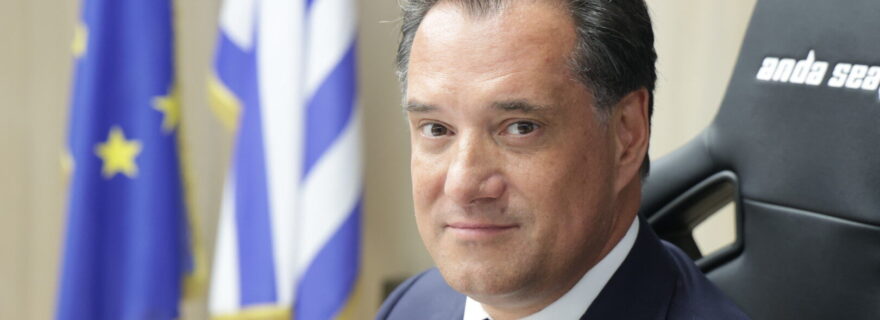
Interview of the Minister of Health Adonis Georgiadis to Grtraveller
As Minister of Health, Mr. Adonis Georgiades has undertaken to address the problems and challenges of a sector that has been the “hot potato” of the respective government. In his interview with GRtraveller, he speaks about the measures taken so far by the ministry to modernise Health structures and transform the National Health System (NHS) into a more human-centred health system, making use of new technologies and funding from the EU Recovery and Resilience Facility.

What are the main challenges for the health sector in Greece today and what measures and actions are you implementing to address them?
As Minister of Health, I undertook two major commitments to improve patients’ lives. Firstly, to reduce the average waiting time in surgeries – which is already decreasing with afternoon surgeries – so that patients stop suffering, and secondly, to do everything humanly possible to reduce waiting times in emergency rooms.
Paid afternoon surgeries, which started last March, have provided a solution for thousands of patients who have finally been able to have surgery faster and save a lot of money. In addition, since November 28th, free afternoon surgeries have been launched through the EU Recovery and Resilience Facility and we have set a milestone of at least 34,500 surgeries by the end of 2025. This will enable us to significantly ease the morning waiting list and gradually give the system a breather.
Health and wellness tourism is a sector
in which our country has the potential
to play a key role.

Regarding the emergency departments, in order to reduce the long waiting times, we have taken a series of measures, some of which are already being implemented and others will be rolled out shortly. For example, we have changed the way shifts are organized, hired more doctors and paramedics in the emergency departments, issued a circular to allow hospitals to obtain remote radiology assessments when there is no radiologist on shift, and in the coming period, we will pilot the use of the “electronic bracelet” – a patient tracking system – in a major hospital in Attica, aiming to expand it to other hospitals across the country by March. With the measures I have already mentioned, I believe that by Easter we will have achieved a reduction in waiting times of around two to two and a half hours.
What actions have you taken and are implementing as the Ministry of Health to ensure easier access to healthcare for citizens and higher-quality healthcare services?
From the moment I assumed my duties as Minister of Health in this second term, I set a primary goal for my team. To carefully plan our steps in order to build a more human-centred National Health System that focuses on the needs of the patient.
I have said many times that the Public Healthcare System is changing, and this will gradually be perceived by the Greek people. Through the Recovery and Resilience Facility, we are implementing the largest renovation program in 93 out of 125 hospitals and 156 out of 318 health centres. We are making the highest number of permanent staff hires since the establishment of the NHS. We are providing the opportunity for NHS doctors to perform private work and for private practitioners to work within the NHS. We are establishing seven University Health Centers, which will operate as Telemedicine Stations for the effective monitoring and management of medical cases on islands and remote areas. We are investing over 200 million euros in secondary prevention programs, which include preventive diagnostic tests as part of the “Spyros Doxiades” Program. We are introducing a Unified Surgery List to provide a comprehensive view of waiting times in every hospital.
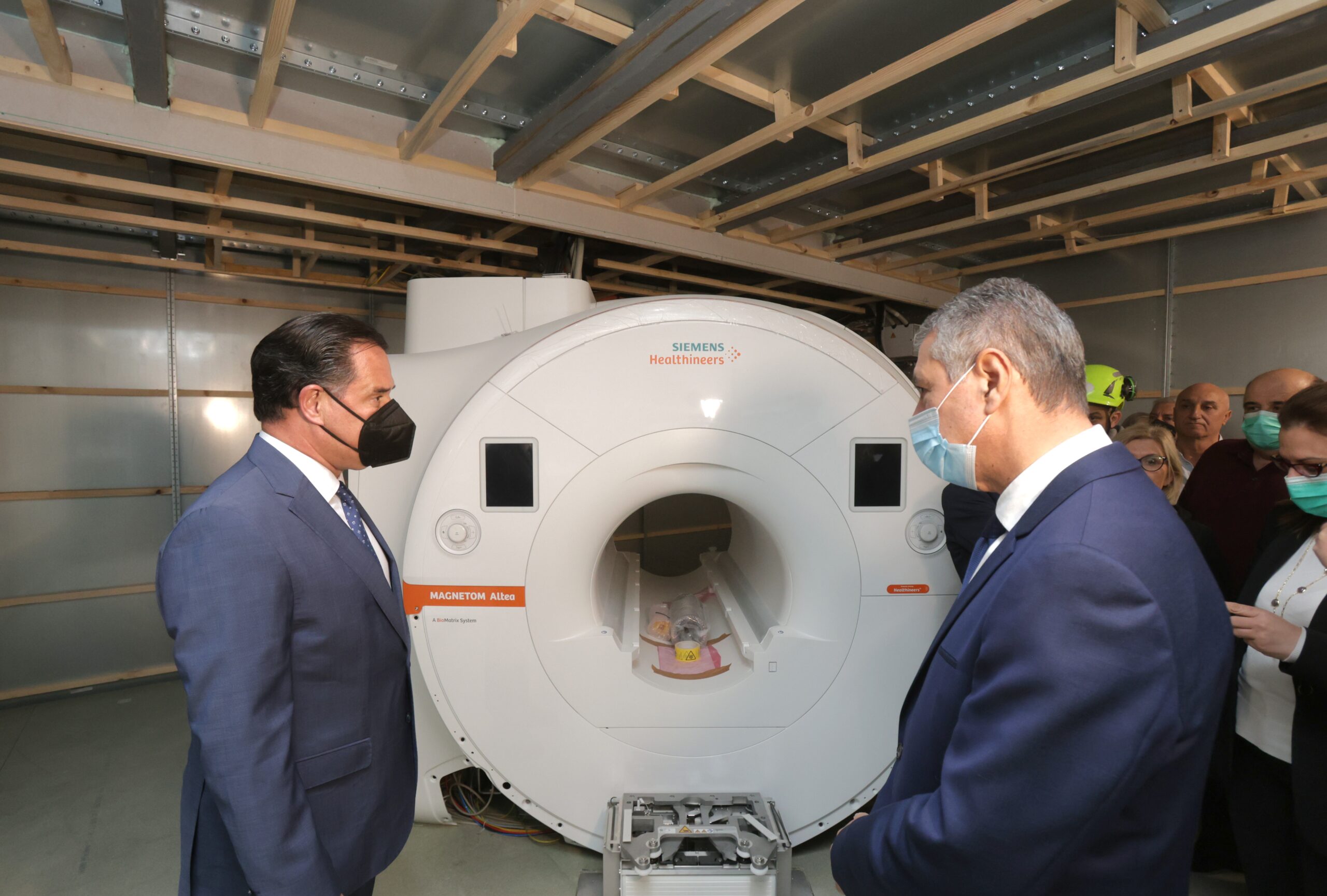
Obviously, not everything is perfect, there are still problems and shortcomings that need to be addressed. But what is certain is that the NHS is changing and changing significantly for the better.
How are the “Spyros Doxiades” preventive screening programs progressing? What should we expect next?
The preventive screening programs ‘Spyros Doxiades’ for breast cancer, cervical cancer, and colorectal cancer are progressing very well. Very soon, in cooperation with the University of Athens, we will launch a prevention program for cardiovascular diseases, which will target 5.5 million citizens aged 30 to 70. I must tell you that Greece will be the first country in the world to implement such a comprehensive preventive screening system for cardiovascular diseases.
My goal remains clear:
to provide high-quality care services to citizens
who actually need them,
when they need them.
Apart from the obvious health benefits, which are the most important, these programs also have a significant cost-saving aspect. By addressing these diseases from the outset, they ultimately cost much less than if they are dealt with at a later stage. Having a strong preventive system and primary healthcare will save resources that will undoubtedly be needed in the future.
Technology has played a significant role in enhancing healthcare services. What are the latest innovations being promoted by the Ministry to utilize technology in healthcare?
The biggest reform is the patient medical record, which will be ready by the summer of 2025. It will revolutionize the delivery of healthcare services in the country, as all doctors will have access to all the information. However, even before that, we will have the ability to remotely diagnose all imaging tests from anywhere in Greece through the central platform of IDIKA. Additionally, there will be the electronic integration of all hospitals in the initial phase, patient tracking, and so on. Overall, we are making great progress in this area, and we owe it primarily to the EU Recovery and Resilience Facility.
You recently announced the Ministry of Health’s pilot program addressing juvenile delinquency. How does the program approach this issue?
This is a pilot initiative we started in Thessaloniki, and we chose to expand it to Athens, specifically to the municipalities of Maroussi, Acharnes, Kifisia, and Lykovrysi-Pefki. This program is particularly significant because, unfortunately, juvenile violence has become an epidemic in our times. It is therefore our responsibility, as the Ministry of Health, to address this issue with a scientific approach. Our goal through the actions that will be implemented is to acquire the appropriate tools and to expand these initiatives from the municipalities to the entire country. These are actions that will positively impact society as a whole. It is a demanding program, and I would like to thank all the scientists, volunteers, and professionals involved in it. As the Ministry of Health, we will be by their side to help as much as we can, and we hope that, in a few months, we will be able to expand the program as much as possible.

The program initially aims at the early detection of minors with deviant behaviour and those at risk of engaging in delinquent behaviour. It also seeks to provide immediate social assistance where needed, particularly in the educational and employment sectors. At the same time, it aims to offer counselling and psychological support to minors, their parents, and their families.
What do you think is the reason for the increase in juvenile delinquency nowadays?
It is not a phenomenon that is easily dealt with. I discuss it with those around me, I am deeply concerned. We even held a wide-ranging discussion in a Council of Ministers on this multifactorial issue. One cause is the very high dependence of children on mobile phones and the violent games they play from a young age. A second factor is that we are experiencing a crisis of values in the Western world and, of course, in our country, unfortunately, in the institution of the family and the concept of discipline. Children, in many cases, are completely out of control. A third reason is that there are patterns of violence in our society in general, which are particularly seductive to adolescents.
The government is rightly taking action by tightening the regulations with the ban on mobile phone use in schools. It is also strengthening the framework of penalties, particularly with regard to parents, because being a parent is a major decision and a great responsibility. You don’t just have a child and let them exist. You must be there for them as long as they need you and guide them. It is crucial for new parents to embrace this mindset. As the State, we do not have a punitive approach; that is why we must be there for children from a very young age.
What is your vision for the public health system in the coming years?
My goal remains specific: to provide quality care services to citizens who actually need them, when they need them. With modern health structures, qualified staff, and preventive screening programmes, without long waiting times that inconvenience the citizens. When I hand over the Public Healthcare System to the next Minister, I want many of the problems, some of which are still lingering, to have been eliminated.

Believe me, every day my team and I try to solve one or more problems. For example, I feel great pride that during my tenure the new University Liver Transplant Surgery Clinic was built at the Laiko Hospital and thus a 22-year-old request was solved. Suffice it to say that the last three years have been the best since the beginning of transplantation in Greece as we have tripled the number of transplants. When the Onassis transplant centre opens at the beginning of next year, together with the other transplant centres that we have in the other hospitals, Greece will reach and exceed the European averages.
Could Greece become a destination for medical tourism, and how ready is the country in terms of healthcare infrastructure and staffing?
Since my first term as Minister of Health, I have known and still firmly believe that medical tourism can work wonders for our country, as it offers multiple benefits for the Greek economy, especially for our tourism sector. During my first term of office, the first institutional framework for medical tourism in our country was created.
In my recent contact with my German counterpart, we worked closely together on medical tourism, as Germany’s expertise in this field is perhaps the highest in the world. Also, the example of northern Europe shows that health insurance funds pay substantial amounts for the treatment of patients in other countries. So think of the benefit for Greece. Therefore, health and wellness tourism is an area where our country has the potential to play a key role, as it offers the right climate, suitable environment, and high-quality medical infrastructure and services.