






MYKONOS |Wind, stone, feeling — the island as you’ve never lived it
Friday | Piraeus
It was her idea. Or his. Nobody remembers anymore — and that alone says something about the way these two work.
At the boarding queue, he’s holding both tickets — Blue Star Ferries, Piraeus–Mykonos. She has already slipped off her sandals and is carrying them in her hand as if she’s already on the beach. “Didn’t you pack enough?” he says. She gives him that look which means the question wasn’t worth asking.
On deck, time changes its rhythm. The Aegean unfolds before them in every shade it knows: first dark, then green, then that blue that has no name. The port shrinks behind them, and with it the city — the noise, the obligations, the hours measured in notifications.
She leans against his shoulder. Says nothing. Doesn’t need to.
Saturday | The Mykonos that has no hashtag
The first thing that touches them when they step onto the island is not an image. It’s air. The meltemi rolls over them, carrying away the dust of the journey, opening something that had been closed. It smells of salt and thyme and warm stone.
“Where are we going?” he asks.
“North,” she says. “No map.”
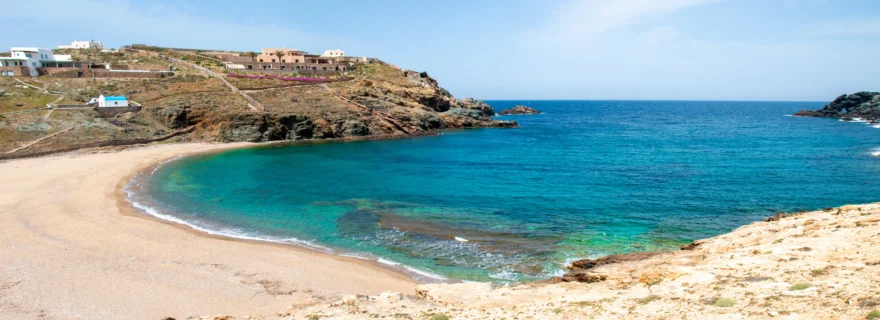
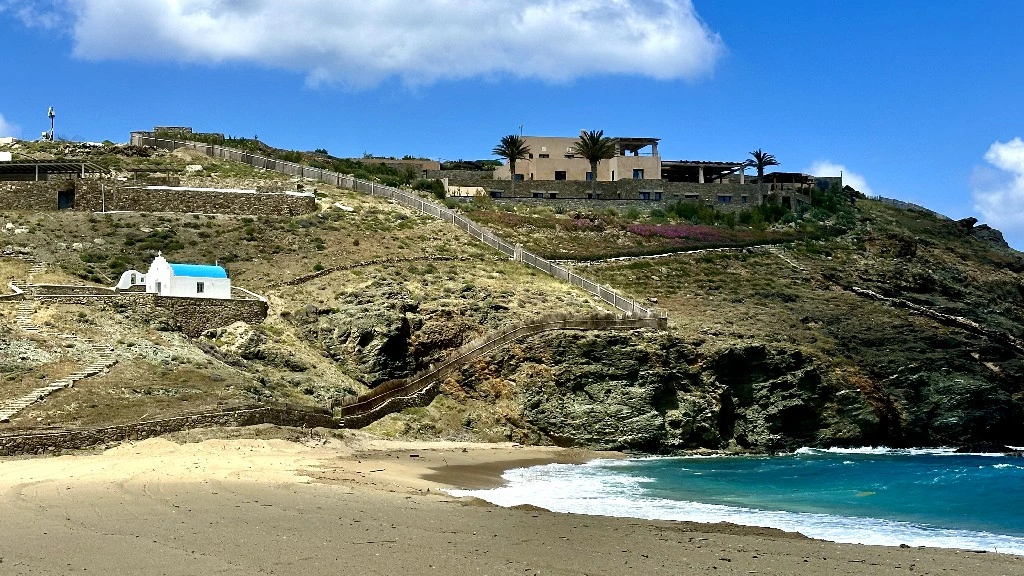
At Fokos, on the northern side of the island, the beach waits for them without ceremony. Deep, clear water, stones rounded by centuries of waves, a taverna with no menu — just whatever the day brought in. They sit. They don’t reach for their phones. The body remembers how to do nothing.
From there, on foot, they reach Mersini — a cradle of rocks that closes around a small sea. There is nothing here. No sunbeds, no bar, no one watching. Just the two of them, the water, and the sun that burns just right. They dive in together, at the same moment, without agreeing to.
This is the Mykonos most people never find: wild, unpolished, so real it almost catches you off guard.
Flavours and moments of the place
Ano Mera doesn’t greet them with fanfare. A square, a few tables in the sun, the scent of coffee drifting out from inside, and the Monastery of Panagia Tourliani standing at the centre with the stillness that only things certain of their permanence can have.
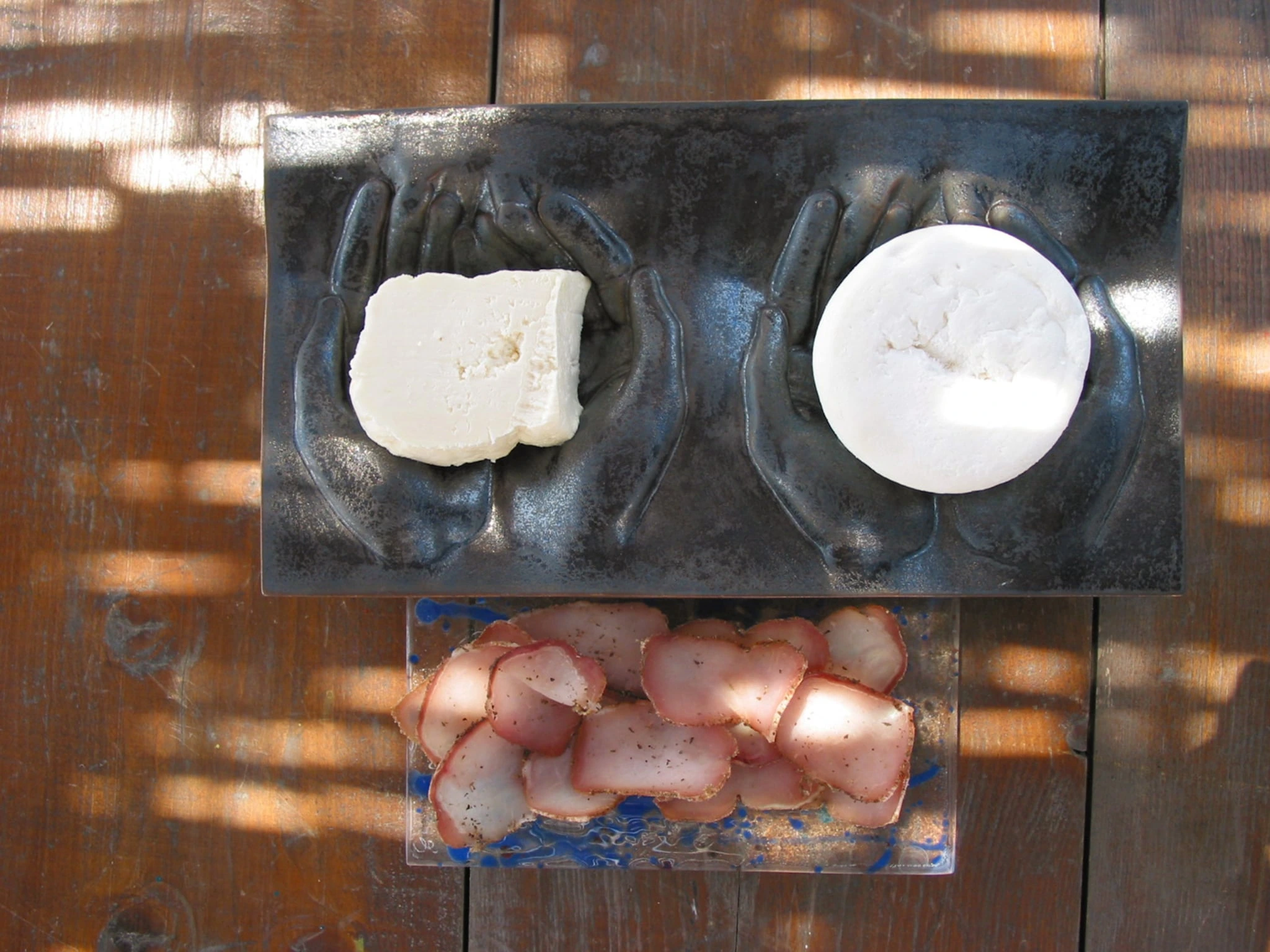
On the table arrives kopanisti — dense, sharp, with a character that doesn’t compromise — and louza, the local cured meat that smells of wind and winter and dry hillside.
“This is Mykonos,” says the owner, setting down the plate.
“The other Mykonos?” she asks.
“The real one,” he says, and disappears back into the kitchen. They exchange a glance. They smile.
Saturday afternoon | Where the wine grows
In Marathi, the road narrows and the landscape shifts. Less white, more earth. Vines, olive trees, animals moving freely. She shoots a photo on film. He tries to make friends with a donkey that isn’t interested.
Mykonian Land is the story of a family that never decided to stop. Three generations on the same land — and Gerasimos Sikiniotis pours wine into their glasses the same way he grew up: close to his grandfather, among the vines and olive trees, with the lute always nearby. Assyrtiko, Mandilaria, wine that grew under a wind that never stops. What elsewhere would be an obstacle, here becomes character.
They drink slowly. With cheese and louza and bread from a wood-fired oven. For a moment they don’t feel like tourists. They feel like guests. “We’ll come back,” she whispers. He doesn’t answer. Because he already knows they will.
Sunday | The edge of the island
At the Armenistis Lighthouse, built in 1891 on the northwestern tip of the island, the wind blows without asking permission. It faces Tinos across the water, as if holding a quiet conversation above the sea. They stand there for a long time, hand in hand. Sometimes the silence between two people is the most familiar thing there is.
In the afternoon they lose themselves in the alleyways of Chora. The Aegean Maritime Museum tells the story of the Greeks and the sea as something personal, not something exhibited. Lena’s House — a 19th-century mansion with the scent of old wood and time that has paused gracefully — makes them talk about homes they don’t yet have, about places they want to return to.
Evening, at the table
Kopanisti, louza, last night’s wine, candles flickering in the breeze. The table is small and their feet touch underneath it.
“This has nothing to do with the Mykonos I was expecting,” she says.
“Good,” he says. And he means it.
Mykonos has learned to hide behind itself. Give it time — take the dirt road all the way to the end, swim at a beach with no name on the tourist map, drink wine with people who remember their grandfather making it — and it begins to reveal itself. Not as a secret. As a place.
And when you leave, you won’t just carry an island you saw. You’ll carry an island you felt — and a face beside you that felt it too.