






A monument that does not belong only to Athens’ past. It continues to shape the way we see the city today.
You can see the Acropolis from countless points across Athens: from Thissio, Pangrati or a rooftop in the city centre. Its presence is so constant that it can almost disappear into everyday life.
Until you stand on the rock itself.
At 156 metres above sea level, the scale changes. Modern Athens stretches around the Sacred Rock, making it clear that the Acropolis was never an isolated collection of monuments. Its history is inseparable from the city.
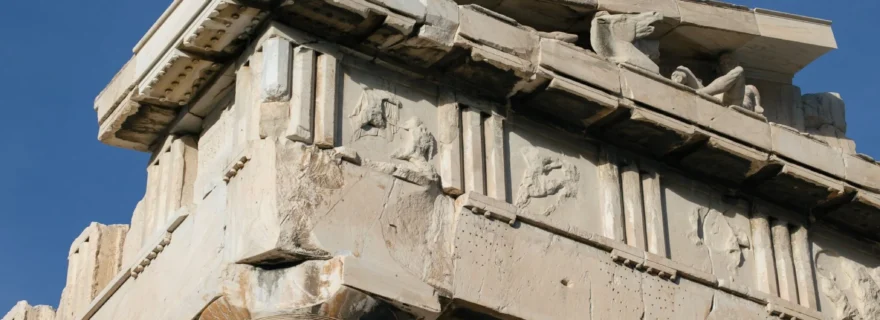
The hill was inhabited as early as the third millennium BC. During the Mycenaean period it became a centre of power, and from the eighth century BC onwards it acquired an exclusively sacred character, centred on the worship of Athena Polias. The form we recognise today was shaped mainly in the fifth century BC. After the Persian destruction of 480 BC, the building programme of Pericles gave the rock the Parthenon, the Propylaia, the Erechtheion and the Temple of Athena Nike. 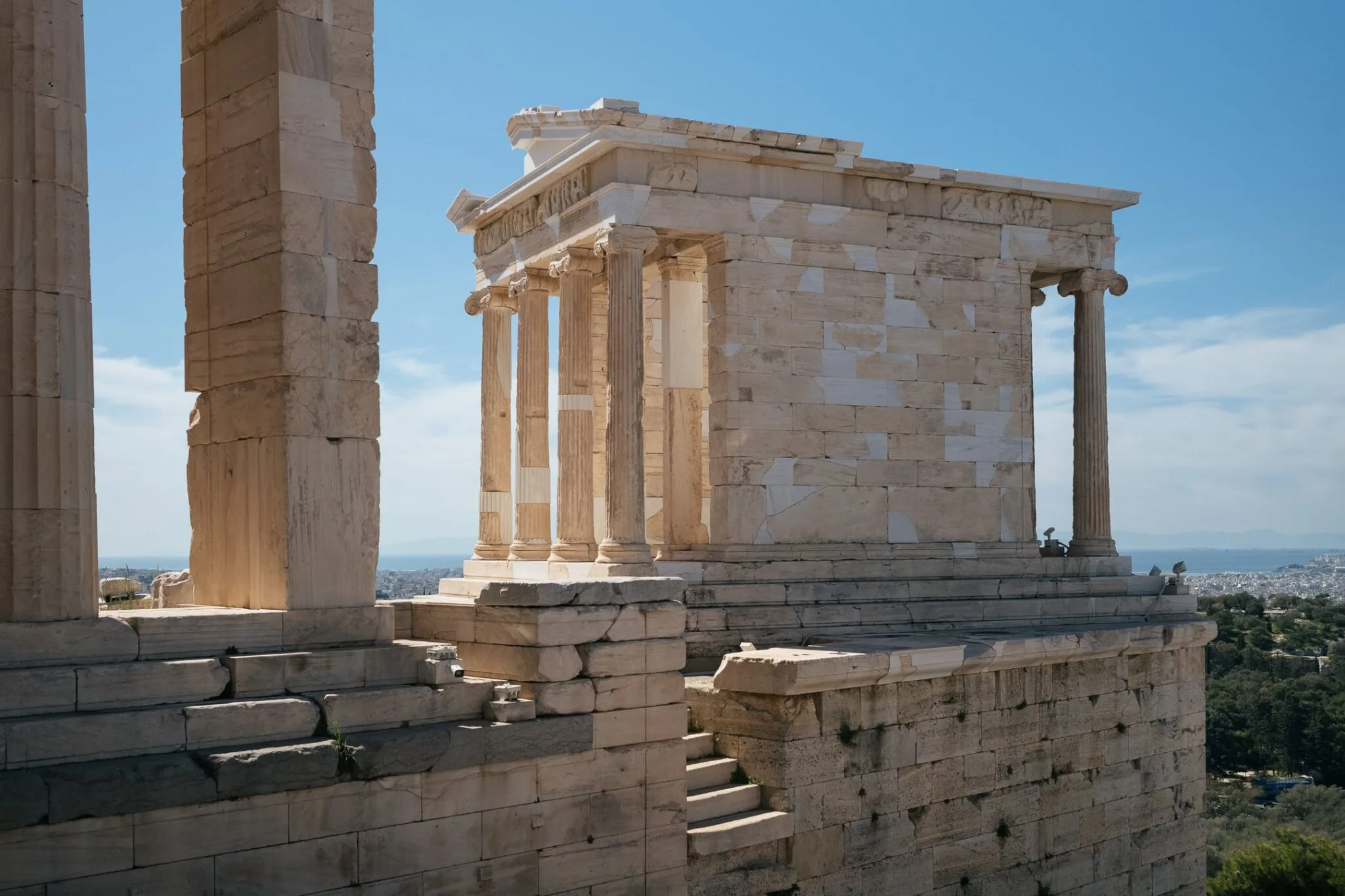
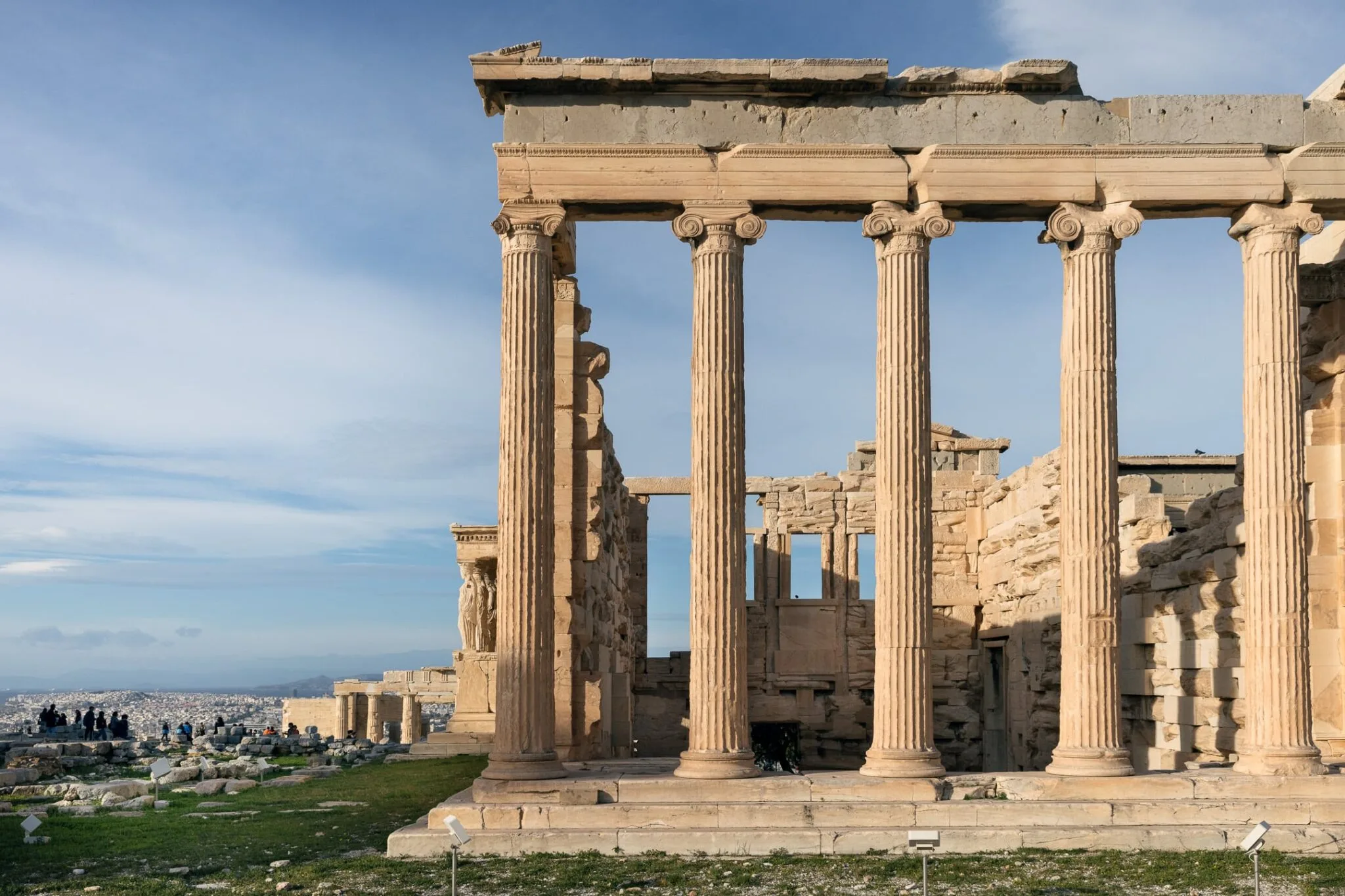
The Parthenon, designed by Iktinos and Kallikrates, with Pheidias responsible for its sculptural decoration, became the best-known monument of the complex. Yet the Acropolis is also experienced through movement: entering through the Propylaia, discovering the asymmetry of the Erechtheion and the Porch of the Maidens, noticing the spaces between the buildings and watching light alter the marble.
And then there is the city.
From the rock, antiquity and contemporary Athens occupy the same field of vision. Two and a half millennia later, the Acropolis does more than make us look back.
It still changes our point of view.
USEFUL INFORMATION
Address: Acropolis of Athens, 105 58 Athens.
Opening hours: 1–15 September 08:00–19:30 • 16–30 September 08:00–19:00 • 1–15 October 08:00–18:30 • 16–31 October 08:00–18:00 • 1 November–31 March 08:00–17:00. Last admission is 20 minutes before closing.
Tickets: €30 full, €15 reduced. Online tickets through Hellenic Heritage.
Getting there: Metro Line 2, Acropoli station, or Lines 1 and 3, Monastiraki station. Bus 230, Acropolis stop.
Acropolis Archaeological Site Chief Guard Office: +30 210 9238747, +30 210 3214172
Ephorate of Antiquities of the City of Athens: +30 210 9238724, +30 210 9238747 • efaath@culture.gr