






Megaron – The Athens Concert Hall | annexM
AFALES | NAVELS
8 October 2026 – 31 January 2027
Danae Stratou’s major new exhibition on the relationship between humans and the natural environment
“The touch of the pure white, perfectly rounded pebbles at Afales, a beach on the western side of Ithaca, became the magic key that would unlock the path to a dialogue with the sculptor Eleni Potaga, my mother.”
Danae Stratou, 2026
annexM at Megaron – The Athens Concert Hall presents, from 8 October 2026 to 31 January 2027, the new site-specific exhibition Danae Stratou, Afales | Navels, curated by art historian Alia Tsagkari. It is the final exhibition project proposed and supported by Anna Kafetsi in her capacity as Director of the Centre for Contemporary Art at Megaron – The Athens Concert Hall (annexM), and is dedicated to her memory, in place of a farewell.
Conceived specifically for the Service Yard at Megaron – The Athens Concert Hall, the exhibition examines the relationship between humanity and the natural environment through time, gravity, the flow of water and the lunar cycle, bringing into the exhibition space forces and processes that exceed the human scale and shape the natural landscape. At the same time, the exhibition foregrounds Stratou’s artistic and personal relationship with the work of her mother, the sculptor and poet Eleni Potaga. The passage from the cosmic scale to matter and from there to the human scale is made perceptible through a series of new works created specifically for the exhibition, as well as through the presentation, for the first time in 25 years, of the installation Breathe (2000), from the permanent collection of the National Museum of Contemporary Art (EMST).
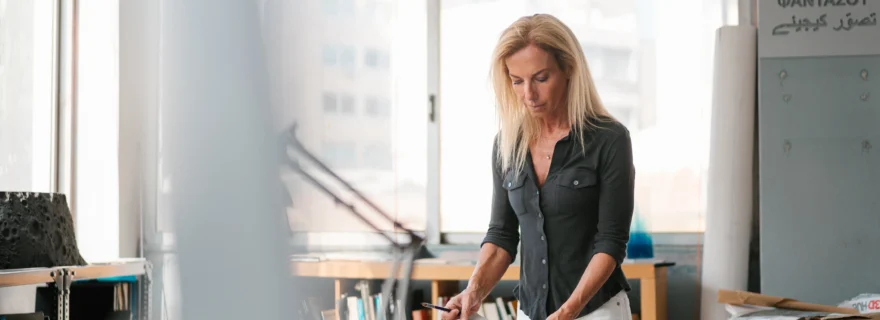
Since the early 1990s, Danae Stratou has pursued a consistent international career spanning sculpture, land art, public art and audiovisual environments and is the only artist in Greece to have developed a sustained practice in land art. Born in Athens in 1964, Stratou studied sculpture at Central Saint Martins College of Art and Design in London (1983–1988) and works across natural and industrial materials, digital and sound technologies, video and photography. Her practice focuses on the relationship between humans and the environment, mobility, life in contemporary cities, and the social and political tensions of our time. Among her works are Desert Breath (D.A.ST. Arteam, Eastern Sahara, Egypt, 1997), The River of Life (EMST, Athens, 2004), Cut – 7 Dividing Lines (Athens, 2007), Upon the Earth Under the Clouds (Old Oil Mill, Eleusis, 2017), Concentric (Nirox Sculpture Park, Krugersdorp, South Africa, 2019), Water Traces – Making the Invisible Visible (The Farm Margaret River, Western Australia, 2023) and Virtuous Spiral (G. & A. Mamidakis Foundation Art Prize 2025, Agios Nikolaos, Crete). Her work has been presented, among others, at the 48th Venice Biennale (1999), the 1st Valencia Biennial (2001), La Verrière at Fondation d’entreprise Hermès in Brussels (2010), the Adelaide Festival (2012), the Critical Dialogues exhibition by EMST and M HKA (2016), and the 7th Beijing Biennale of Contemporary Art (2017).
Three years after completing her most recent site-responsive land art project in Australia, Stratou returns to Greece with a major new solo exhibition.
In Afales | Navels, Stratou returns to natural matter and to the forces that transform the landscape, organising the individual works around the movement of water and the lunar cycle. The soundscape combines sounds of water and sea with excerpts from Eleni Potaga’s poem Marvellous Pebble, recited by the iconic actress Reni Pittaki. The recitation of the poem and the sound of the waves introduce water as an acoustic presence, anticipating the progression made visible in the exhibition, from the Moon’s gravitational influence to tidal movement and, through the sea’s prolonged action, to the shaping of the pebble.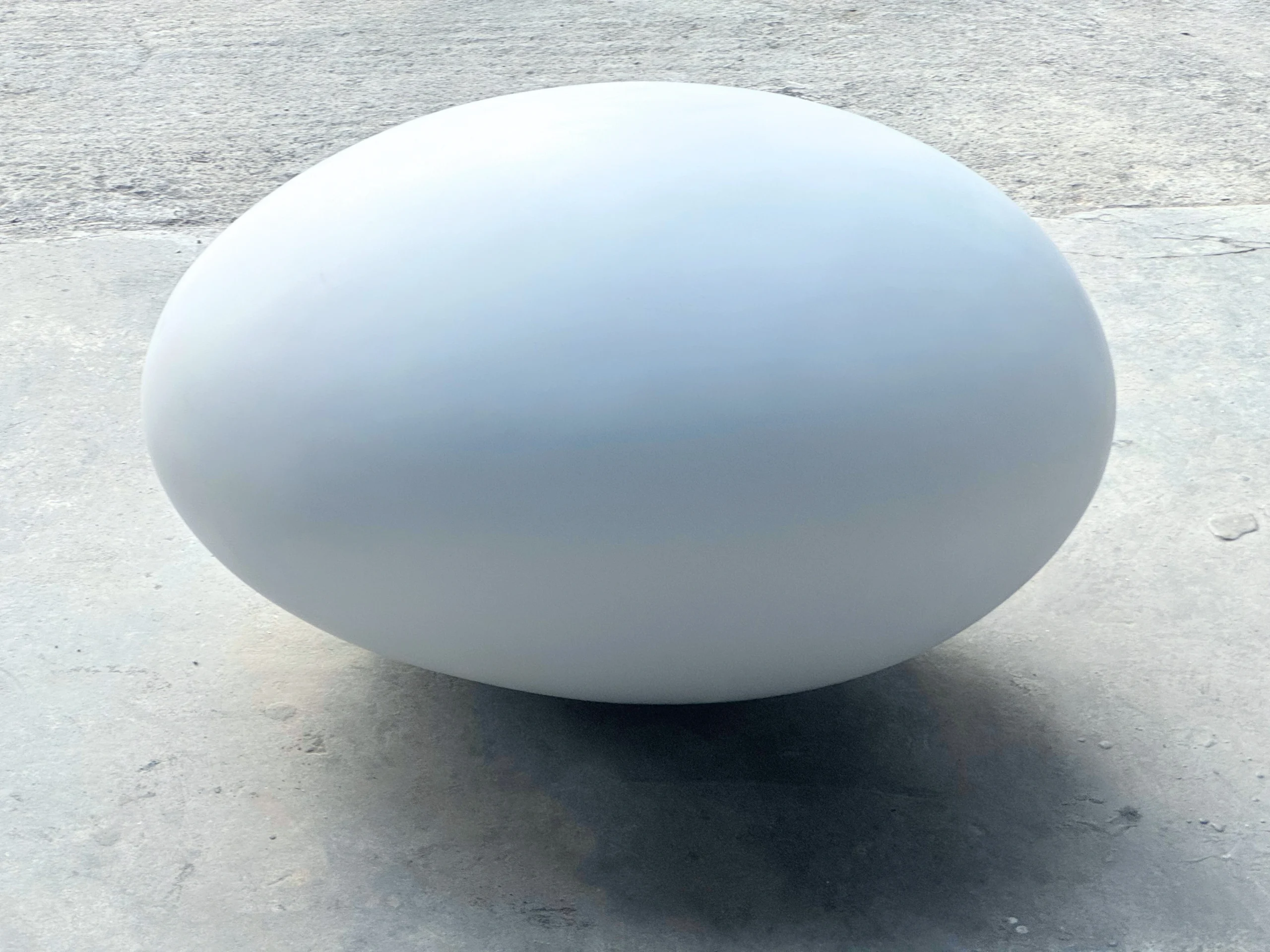
The works Afales I and Afales II, two sculptural transcriptions of the same natural pebble collected from Afales Beach on Ithaca, one in resin and the other in metal, transpose a small-scale found object into monumental dimensions. In both versions, three-dimensional scanning and digital modelling of the original pebble are combined with traditional casting and hand-finishing. These two sculptural pebbles retain in their form the trace of water’s impact and connect the natural prototype with the exhibition’s title and with Potaga’s ovoid sculptures. Through phonetic association, Afales is linked to afalos, the navel, which bears the trace of the severed umbilical cord and marks the transition towards autonomous existence. Simultaneously, the ovoid form of the sculptures recalls works by Eleni Potaga amid which Stratou grew up. Potaga’s Muse (2006), permanently installed in the Megaron Atrium, brings her work into dialogue with the exhibition.
In spatial proximity to the two sculptures, Tidal Ellipse, an elliptical disc sixteen metres in diameter made of raw salt, renders the Moon’s orbit around the Earth in spatial form. In the light-based sculptural installation Selene, the Moon’s gravitational influence, fundamental to tidal movement, links the installation to the pebbles, whose form has been sculpted by the movement of water. A scaled sculptural model of the Moon appears to float in space, following the succession of lunar phases in real time through programmed lighting. The photographic installation Lunar Phases is based on the systematic recording of the Moon as it rose over a period of three years. Each photograph captures a specific moment of observation, while the sequence as a whole records the succession of lunar phases over time.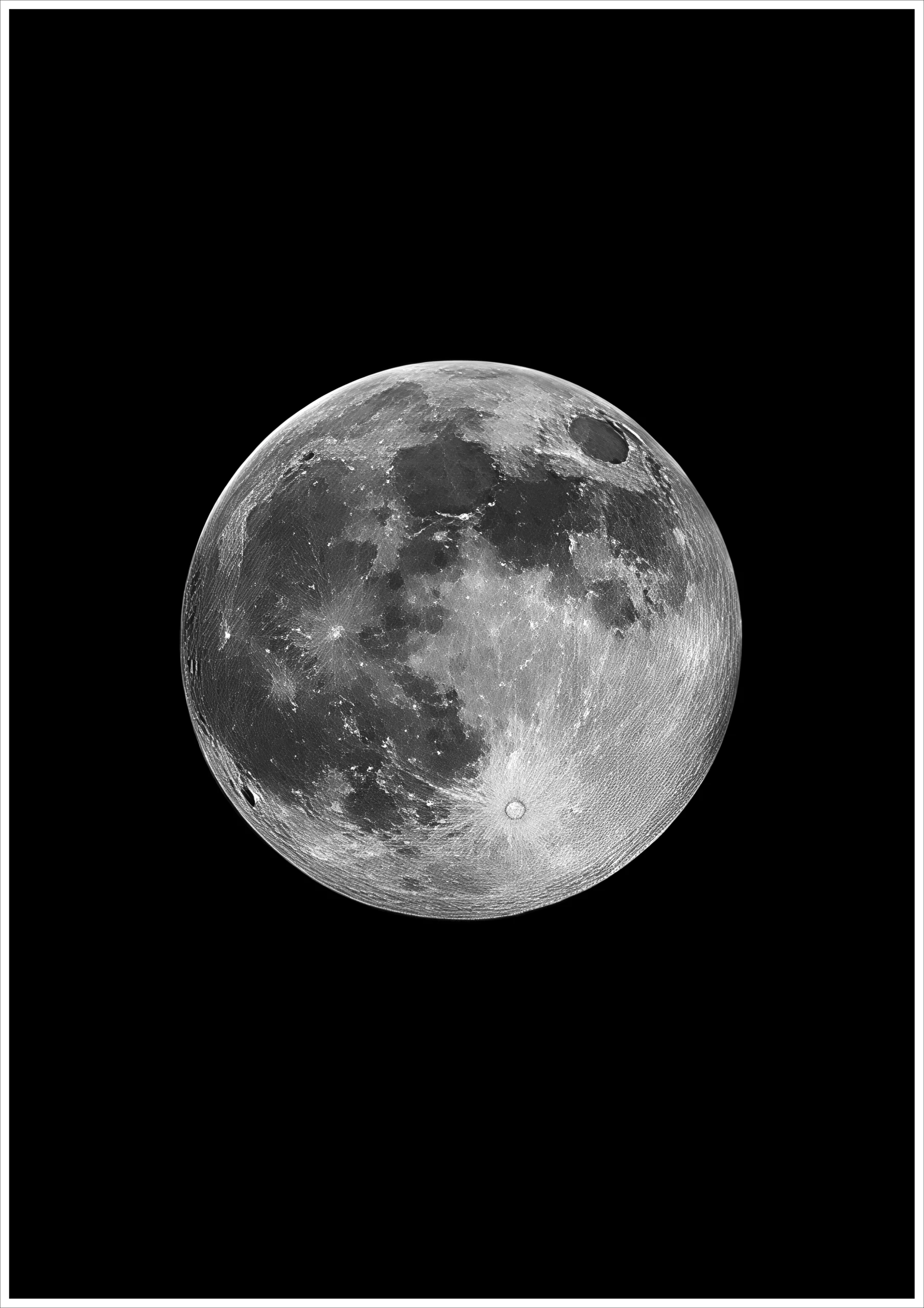
In Breathe (2000), this cyclical movement provides a grounding element, invoking the rhythm of the human body. The installation comprises soil, light, sound and a specially designed mechanism that makes the earthen surface rise and fall rhythmically, echoing both the tide and breathing. The inclusion of Breathe in Afales | Navels connects the new exhibition to enduring strands of Stratou’s practice, including the use of natural materials, the transposition of landscape processes into the exhibition environment and their rendering on a human scale.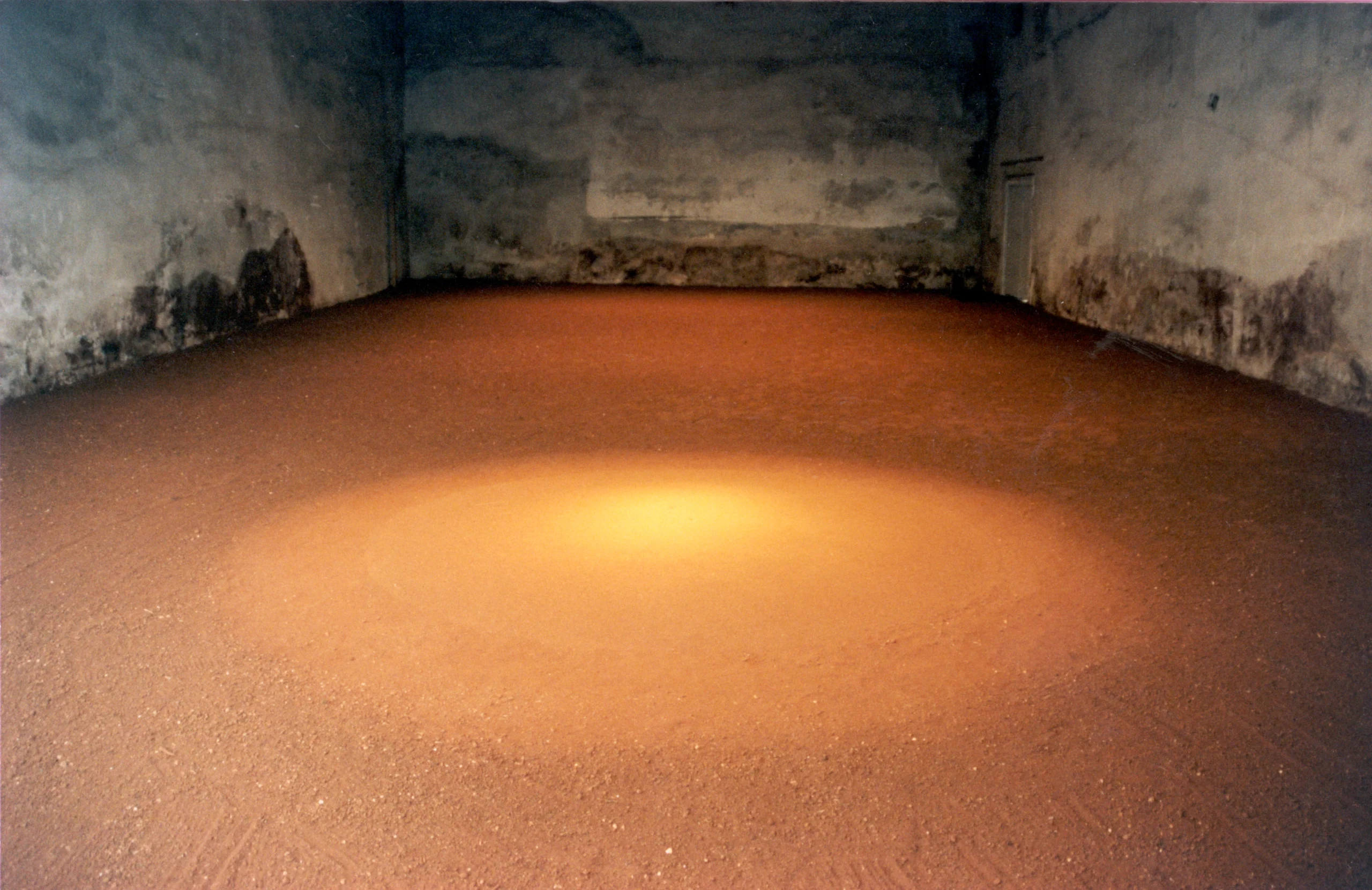
As curator Alia Tsagkari notes, “As art becomes an extension of nature and nature an extension of art, the exhibition traces the continuous oscillation between macrocosm and microcosm, natural process and artistic act.”
The exhibition Afales | Navels is accompanied by a bilingual catalogue with texts by the artist Danae Stratou and curator Alia Tsagkari.
Exhibition dates: 8 October 2026 – 31 January 2027
Opening: Thursday 8 October 2026, 19:00
Venue: Service Yard, Megaron – The Athens Concert Hall
Admission: Free
Opening hours:
Tuesday, Wednesday, Friday, Saturday, Sunday 12:00–20:00
Thursday 13:00–21:00
Monday: closed
The exhibition will be closed on 24, 25, 26 and 31 December, and on 1, 2 and 6 January.
annexM | Megaron – The Athens Concert Hall
Vass. Sofias & Kokkali, 115 21 Athens (entrance from Kokkali)
T: 210 728 2000, 210 728 2333, www.megaron.gr