






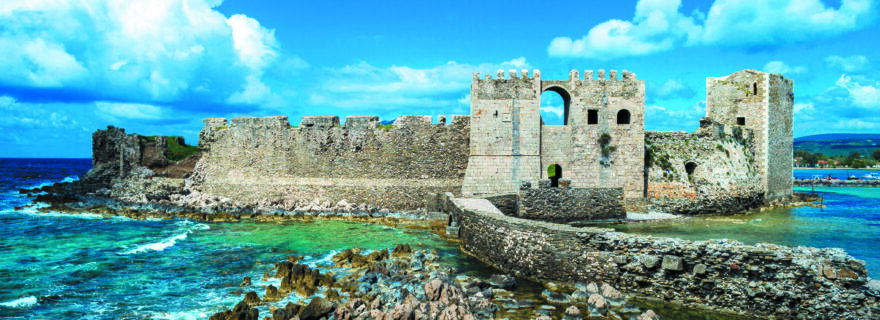
Embark on a journey through time, history and myth, from beautiful Kyparissia to the fairytale seaside villages of Messinian Mani, without missing a minute of the deep blue sea from your eyes. Visit the palace of the wise king Nestor in Pylos and the medieval castles in Methoni and Koroni. See the restored ancient theatre of ancient Messina and visit the monastery of Panagia Voulkanos. Take a tour of modern yet historic Kalamata before you end up
in the “embrace” of Western Mani, where the rocky slopes of Taygetos, dressed in the green clothing of nature, end up in the picturesque villages of Stoupa, Kardamylion and Agios Nikolaos.

In the beautiful capital of Messinia, the famous “Kalamatian dance” or “sirtos” was “born”, whose history is lost in the depths of the centuries.
Numerous herbs and aromatic plants give off their wonderful smell everywhere in the area: oregano, mint, fennel, thyme and rosemary.

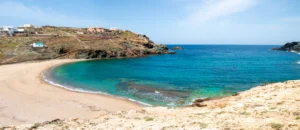
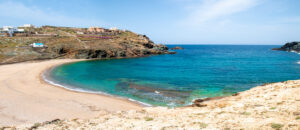
Discover unique beaches with turquoise, turquoise and deep blue waters, white pebbles, tall trees and imposing rocks. One of the most beautiful beaches of the Mediterranean, the
Voidokilia, near Pylos, the sandy beach of Kalogria in Stoupa, the unique beach of Sapienza, the island opposite Methoni, with its wild beauty and unspoilt nature. Walk through the mountain villages of West Mani and discover the terrestrial paradises, the wetland of Gialova, Polylimnio, the springs of Neda, between Messinia and Ilia, and the gorge of Ridomou.

Here you will enjoy the Maniantikos lalangia, the souvlaki gournopoula, codfish with red sauce and Corinthian raisins, the smoothie, which resembles sausage and liopita,
made with traditional dough, the famous Messinian olives and the famous Coronean olive oil. In the villages, housewives cook petoules, thin pies with porridge, cooked on wood on old picks.

INFO The sea between Methoni and Sapienza “hides” secrets and treasures. This is the deepest coastal point in the Mediterranean, where the international scientific community is using the underwater neutrino detecting telescope to search for the past and future of the Universe. Many ancient shipwrecks are scattered on its seabed, such as the “sarcophagus wreck” from Roman times.