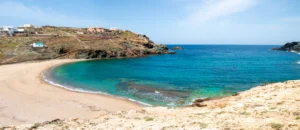







Get to know the place where the chieftains of the Revolution of 21 were initiated into the Society of Friends and sworn in, the birthplace of the Ionian School and our national poet Dionysios Solomos. Make an appointment at St Mark’s Square, where literary personalities such as Andreas Kalvos used to meet. Visit the folklore museum and the cathedral of Agios Dionysios. Watch the sunsets at Bohali, Kampi with a view of the Bay of Seals and Keri with the famous 9-meter high lighthouse. Explore Laganas, with its exceptional landscapes, impressive beaches and beautiful villages.

Its music tradition remains “alive” in the taverns of the island. The well-known and popular Zakynthian serenades, the serenades, the mandolinata and the arekia, the four-voice, Zakynthian folk song. For those who choose the days of Easter, you will be pleasantly surprised by hearing hymns to the peculiar Zakynthian church music on Maundy Thursday.

In the spring, Zakynthos is filled with the fragrance of the boo-garinia, a type of jasmine that “overflows” in the courtyards of the old houses in the town and the caramelized mandolins outside the various workshops.

Cycling is one of the healthiest and most exciting ways to discover Zakynthos. The beautiful villages, with their peaceful, green landscape, preserving the folk tradition and dialect. Pedal along the coastline of Laganas Bay, in the Zakynthos Marine Park with hundreds of nests of the loggerhead turtle. Alternatively, experience horseback riding or explore by boat, the famous beach “Navagio”, the Blue Caves, Marathonisi and the Caves of Keriou.
The ‘national’ dish of the island is the ‘sartza’ of beef or veal, with tomato, local oil and oregano. Delicious dishes with za-chicken rabbit and the famous “garlic stubby” made of eggplant and garlic. Accompany it with the fruity rhubarb wine and refreshing verdea (verdea). For dessert, taste either mandolato and pasteli.
INFO At the highest point of the town of the island, the Venetian Castle of Bohali is located with a magnificent view. There Theodore Kolokotronis was coming up, and he was showing his son the Peloponnese and saying to him: “Our forefathers lived there, now that land is sighing in the yoke…”.