






“Always remember Ithaca…” (Cavafy), its lush green nature, its beautiful beaches and natural bays, its traditional and medieval villages but mainly the peaceful atmosphere that surrounds it. Even the “seductress” Nymph Calypso could not keep Odysseus away from Ithaca. And if the palace of the resourceful king has not yet been found, there is charming Kioni and the island of Lazaretto, a stone’s throw from the island’s capital, Vathi. You will be amazed by the massive monoliths, creations of nature in the medieval village of Anogi and the triangular and cylindrical “pyramids” in Exogi.

You will also hear here the melodic ka-dades with the sound of the mandolin, the guitar and the violin but also rhymes, quatrains of folk poetry that circulate from mouth to mouth.

In the mountains of the island you will find the smell of sage, or alyssfakia. Thyme, rosemary and sage, a type of marjoram that grows only in Ithaca, are fragrant, filling our nostrils with the beneficial scents of nature.

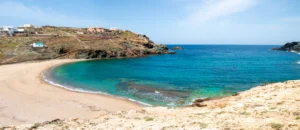
Discover its beautiful beaches, such as Platia Ammos, the lively Filiatro, Vathi and Skinos. Explore the Cave at Roots and follow the path from Exodus to Polis. A stop in Roussano to admire all of North Ithaca, Kefalonia and the Ionian Sea. Climb to the Virgin of the Cathars on Mount Niriton to enjoy unique sunsets.

Try purées, polpetes, tumacci and chestnuts. The ultimate traditional dish of Ithaca, however, is the chicken in a casserole or tserepato, cooked in a kind of clay pot. For dessert, try the local ravani with honey, olive oil and rice and the katimaria – the dry cakes of Ithaca.
INFO A mystery hovers over Ithaca. The “central figure” of the mystery is John Pope, a wealthy Ithaca benefactor who died in 1941 and was buried at the highest point of the Exodus. Two pyramids, built by Efstathios Raftopoulos in 1938, are also of his inspiration. The “priceless” treasure he left behind has not yet been found and the “legend” says that it will appear in a hundred years from his death.