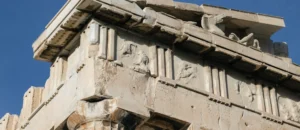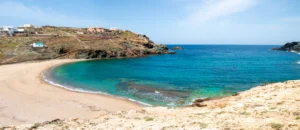







With the wings of the mythical Pegasus, brought to Acrocorinth by Perseus and tamed by Bellerophon, tour the beautiful Corinthia. In less than an hour, you will find yourself on magnificent beaches with clear blue waters, small green paradises and monuments that bear witness to the myths and history of this place. The famous Loutraki with its thermal waters, Lake Vouliagmeni and the magnificent sunsets at Iraio. Ancient Corinth, where the Temple of Apollo and the Step of Apostle Paul coexist. Nemea, where Hercules killed the terrible lion and Lake Stymphalia, where the demigod hero chased the bloodthirsty birds with his arrows. The Corinth Canal remains one of the wondrous human achievements, and next to it is the Diolkos, a ship-towing corridor used by the ancients for 1,600 years. Tour Byzantine monasteries built in the
on rocks and surrounded by greenery, in Chiliomodi and Tarsos and admire the house of Sikelianos, at the edge of the forest of Pefkias, in Xylokastro.
In Corinth, which gave birth to two important clarinet virtuosos, Nikos Relias, the originator of the Greek radio signal, and Kostas Kontogiorgos, folk music remains alive, especially during religious festivals, such as the fifteenth of August festivals.
The scents of oregano, thyme and mushrooms waft through the mountains, while the plains are scented with orange, lemon, apricot and walnut trees.

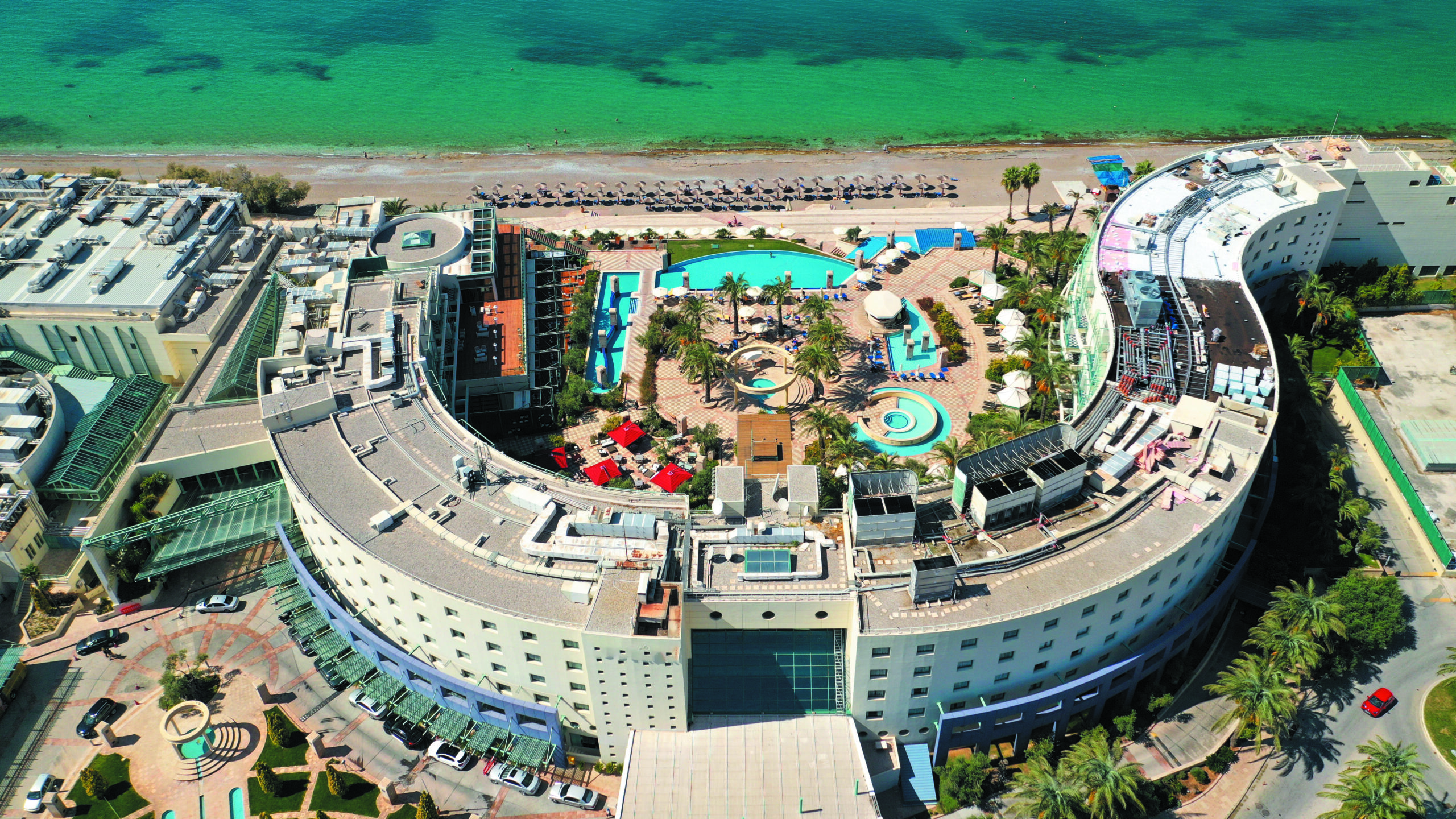
Dive into the cool waters of the Corinthian Gulf, in Kiato, Xylokastro, Vrahati and Loutraki. For a closer getaway, choose the beach of Agioi Theodoroi, while for a more relaxing
hiking and unique experiences in nature, visit the “Corinthian Switzerland”, as it is called, the plateau of incredible beauty, the plateau of Feneos overlooking the artificial lake Doxa.
Follow the paths of Ziria and “raise” your adrenaline in the Isthmus with bungee jumping.

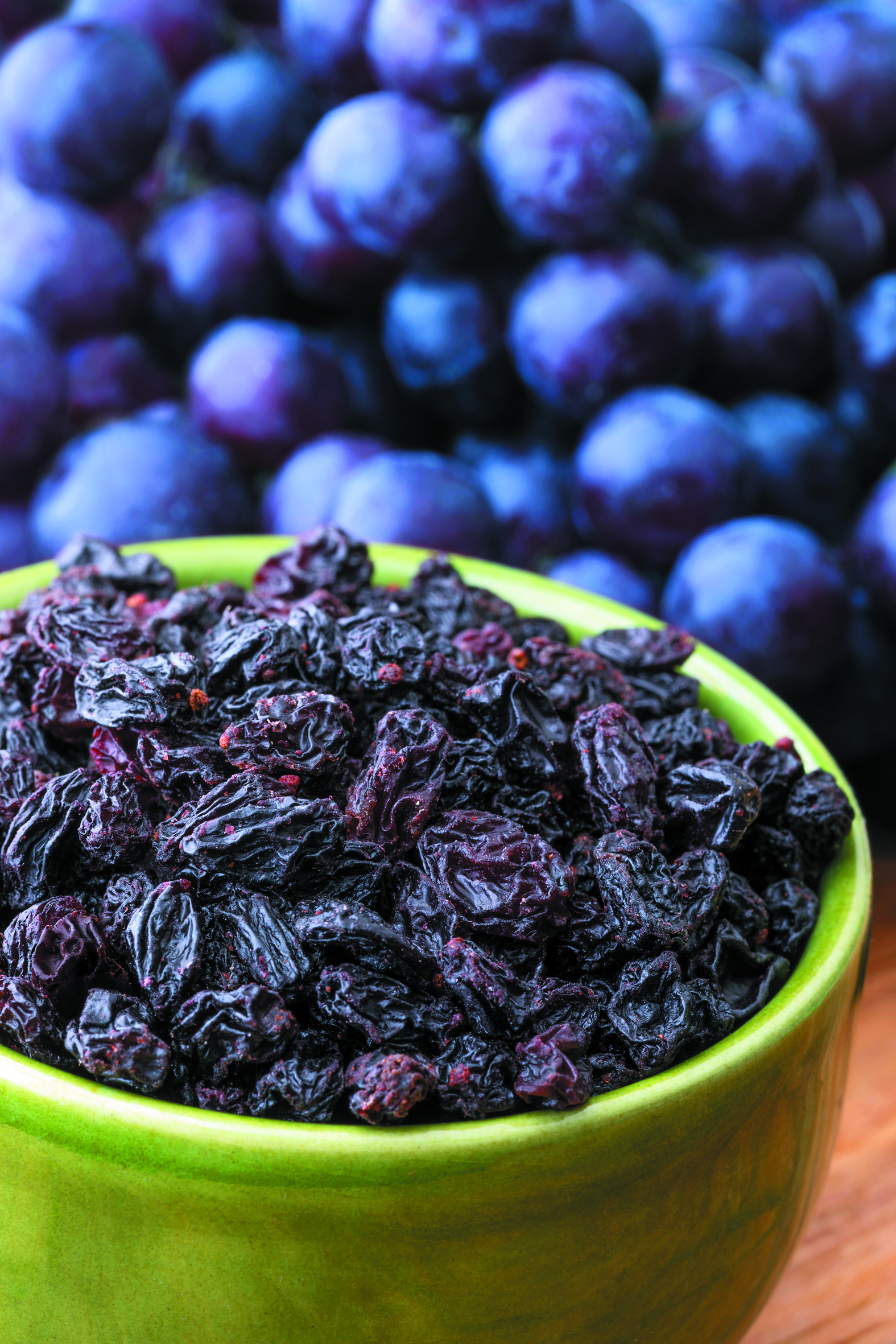
Taste traditional dishes with fish, meat and Corinthian raisins. Enjoy Feneos legumes, homemade noodles with rooster and accompany with Nemean wine.
INFO The opening of the Isthmus was first envisioned by Periander, one of the seven wise men of antiquity, in 602 BC and completed by the Hungarian general Stephen Tyrr in 1893 AD. The project took 11 years, employed 2,500 workers and used the most sophisticated machinery of the time.