






Έλληνες επιστήμονες διέπρεψαν με ανακαλύψεις που επανακαθορίζουν την πρόληψη και θεραπεία σοβαρών ασθενειών.
The “biological water slide”
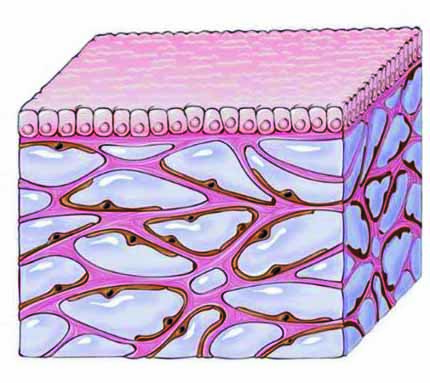
Petros Benias, a 38-year-old gastroenterologist from Meganisi, Lefkada, who is a member of a specialised team of scientists, discovered with his colleagues the interstitium or the “biological water pipe” of the human body.
This organ is made up of a network of fluid transport channels in the body, which, among other things, is probably used by cancer cells to spread.
According to the Greek gastroenterologist, “the compartment is a chain of compartments, supported by strong and malleable tissue proteins. It lies under the skin and between the muscles, runs through the digestive tract, lungs and urinary tract, and surrounds the arteries and veins.
Eventually, in the form of a river, the fluid carried by its individual ducts “flows out” into the lymphatic system of the human body”.
New region in the human brain

The internationally renowned “cartographer” of the brain, Greek Professor George Paxinos, a researcher at the Neuroscience Research Australia (NeuRA), has discovered a new, previously unknown region of the human brain.
The area, which C. Paxinos called the “endorestiform nucleus” (Endorestiform Nucleus), located near the point where the brain joins the spinal cord.
Specifically, it is located within the lower cerebellar cortex, an area that integrates and combines sensory and motor information in order to correct posture, balance and small dexterous movements.
The lower cerebellar peduncle, also called the ropey body, is like a river that carries information from the spinal cord and brainstem to the cerebellum.
The area is devoid of monkeys and other animals. Mr. Paxinos. stated: “The function of this newly discovered brain region remains to be determined. Now that it has been mapped, it will be possible to study it by the wider research community.”
Intratympanic cortisone injections:
The new, safe and effective method of hearing loss treatment,
Dizziness/deafness and buzzing The administration of cortisone through the ear drum is the latest in the treatment of several causes of hearing loss, dizziness/deafness and buzzing, which are often difficult to treat with other methods.
The otolaryngologist gives local anaesthesia with a cotton swab or sponge. It then painlessly penetrates the tympanic membrane with a fine needle. The medicine gets right where it needs to go, in the inner ear, which includes the cochlea and the labyrinth.
Conversely, when the patient receives cortisone in pills or IV fluids, they get large doses, but very little of the drug reaches the ear.
The side effects of cortisone are avoided, and diabetics can safely undergo this treatment. Possible complications, mainly “ringing” of the ear and vertigo of seconds, are rare.
The cost of the treatment is low. The earlier after the onset of discomfort the injections begin, the better the expected result. In conclusion, intratympanic cortisone injections are a safe, painless and effective method for the treatment of hearing loss, vertigo/dizziness and tinnitus of various etiologies.

MD. Konstantinos
Sp. Papaspyrou
Ear, nose and throat surgeon
Children – Adults
Doctor & Specialist in University ENT
Clinic Mainz Germany