






Hagia Sophia was the inspiration of Constantine the Great and a vision of Justinian [ 527-565 AD].
When the first temple was destroyed, during Nika’s stance, Justinian contributed to the grandiose plan to rebuild the Great Church from the ground up, applying new for his time plans of vaulting and statics. Together with the engineer Anthemios from Trallies and the architect Isidoros from Miletus, he wanted to create a different and impressive building that would surpass the technological possibilities of his time.
Justinian himself personally supervised the progress of the project from the early hours of the morning, even dropping silver coins on the building materials to reward the workers who were the first to arrive at the construction site. Within six years, Hagia Sophia was completed!
The two architects combined the style of the rectangular basilica, according to which the first Christian churches had been built, and the style of the pericentric church with a dome. Thus a new style was born, the basilica with a dome!

The inauguration was officially celebrated with great pomp on 27 December 537 AD. When Justinian beheld from the gates the glittering spectacle of the interior of the temple, with its mosaics, polychandeliers and the sacred vestments of the clergy, he was seized with enthusiasm and in an outburst of joy, seeing the superiority of Hagia Sophia over the famous Temple of Solomon, and raising his hands to heaven, exclaimed: “Glory be to God, thou art a work worthy of such a merit. Nineveh to Solomon.”
The design of the dome in relation to the masonry and the clever way of supporting it is an engineering marvel. Four huge pessaries, 30 metres apart, support the four large arches on which the dome, 31 metres in diameter, rests. The dome gives the impression of floating because of the windows around the base. This is what impresses the viewer the most.
Procopius – a 6th century AD historian – says that the dome is a magnificent and at the same time terrible to behold, so light and airy that it seems to hang from the sky on a golden chain rather than being supported by solid foundations.
During the building of the dome, the arches, the pews, the great columns and generally in all the galleries of the temple, the priests placed sacred relics in openings left by the craftsmen, “In every column of the upper and lower, in each one of them a relic has been enthroned”. Because of this, many miracles are said about Hagia Sophia not only among Christians but also among Mohammedans. The decoration of the interior of the temple was of equal importance to its architecture. Among the mosaics that are preserved, the Virgin Mary in the arch of the sanctuary and the Prayer stand out.
The great performance of the Deesis in the church’s gallery was a tribute by Emperor Michael VIII Palaiologos, to commemorate the recovery of Constantinople from the Latins in 1261. This mosaic admirably summarizes the trends of Palaeologan painting. The decoration of the temple was completed by colourful marbles, which covered the walls (orthomarbleization), as well as high columns of purple, white and greenish marble, crowned with marble capitals.

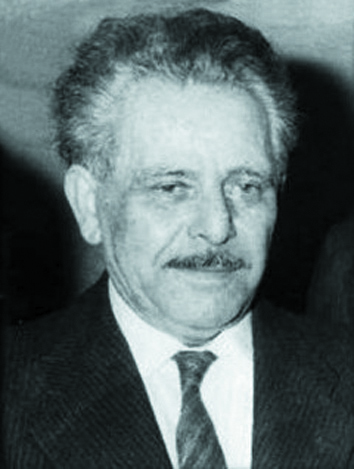
Fotis Kontoglou writes in his book “The Painful Romiosity”: “Entering into Hagia Sophia you feel in your whole being what it means to be a new creation, you remain motionless. Another world accepts you. Something sublime, celestial, boundless and at the same time warm, humanly familiar.
Then you can understand why the representatives of Vladimir of Russia when they came in here were speechless. They could not visit another country for another religion was no place for any discussion. Here they said is heaven on earth. This temple does not just belong to a nation, but saves the world, it is not a feat of logic, but a theological achievement and a gift from above, a simple testimony to the charity of God who has ascended from heaven and descended.”
The secret of Hagia Sophia
The mystery of Hagia Sophia is that for about 1500 years it has remained standing, despite the great earthquakes that have taken place in the area. It is shaking but not collapsing. Even if there is a 7.5 magnitude earthquake, Hagia Sophia may be the only building left standing in Istanbul.
Years of scientific research by an international team of professors into the secret of the building’s strength showed that the mud used was a semi-crystallized material that has the ability to absorb the energy of the earthquake: “Even before the 1999 earthquake, we had made sure that the composition and property of the material used could withstand a major earthquake,” assured NTUA professor Tonia Moropoulou, who participated in the scientific research. In addition, the material used in the dome of Hagia Sophia is a type of refractory brick, twelve times lighter than normal brick. It is said that lime was fermented with oil instead of water, even honey, eggs, shells and other organic materials were used to give it this great strength. Moreover, the fact that the columns of the Hagia Sophia are reliquaries is another “secret” of the sanctuary.
Legends and traditions around the Hagia Sophia
On the day the City was taken, they put the Holy Altar of Agia-Sofia on a ship to take it to Fragia, so that it would not fall into the hands of the Turks. But there in the Sea of Marmara the ship opened and the altar sank to the bottom. In that place the sea is oil, no matter how turbulent and wavy the sea is around. And sailors know this place by the peace that is always there, and by the fragrance that comes from it. Many people even claimed to see it in the depths of the sea.
The most popular legend has to do with the marbled king, the last emperor to be marbled in the temple of Hagia Sophia. When the city passed into Turkish hands, the people could not believe that such a building had fallen into Muslim hands. So they spread the word that the king hid behind a pillar of the temple of Hagia Sophia, got lost in the corridors and remained hidden there.
Modern history: from mosque to museum and back to mosque
For more than a thousand years (537-1453 AD), Hagia Sophia will be the centre of Orthodoxy. There, the people will celebrate the triumphs, mourn the calamities and praise the new emperors. The last mass was celebrated on 29 May 1453. The emperor Constantine Palaeologus XI Dragatos, after praying with the people and asking for forgiveness for his mistakes, left for the walls, where he fell in battle.
After the fall of Constantinople, Hagia Sophia became a Muslim mosque by Mohammed II the Conqueror and after the Asia Minor Catastrophe and the establishment of the modern Turkish State by Kemal Atatürk, it was converted into a museum by a decision of the cabinet on 24 November 1934. Hagia Sophia as a museum opened its doors on 1 February 1935 and on 6 December 1985, it was declared a UNESCO World Heritage Site.
On 10/7/2020 the President of Turkey, Recep Tayyip Erdogan, signed a decree, which reopened Hagia Sophia as a mosque.
The sacking of Hagia Sophia by the Crusaders in 1204
The English Byzantinologist Sir Stephen Runciman in his work “The History of the Crusades” describes the 1204 sack by the Franks “In the Hagia Sophia itself one could see drunken soldiers tearing the silk curtains and tearing down and shredding the great silver iconostasis, while irreverently trampling holy icons and sacred books. Even the Saracens would have shown more mercy, exclaims historian Nikitas Choniatis, and tells the truth.”
The same historian replies to those who claim that Byzantium had no art, “Byzantine art was one of the greatest art schools in the world. Some argue that Byzantine art is static. It wasn’t static at all, but it was one of the most important art schools in the world, and as time goes by it is appreciated more and more, and those Greek intellectuals who tell you that Byzantium created nothing are blind.”
Today, the Hagia Sophia of God, however seemingly captive to political arbitrariness and arrogance, remains irresistible and supreme, because great monuments always remain unscathed by the whims of circumstances and history is not erased no matter how obscured.
Throughout history, Hagia Sophia has survived, open and welcoming to believers and non-believers alike, with the figures of Constantine the Great and Justinian on the mosaics of the exonarthex and the narthex welcoming the newcomers.