








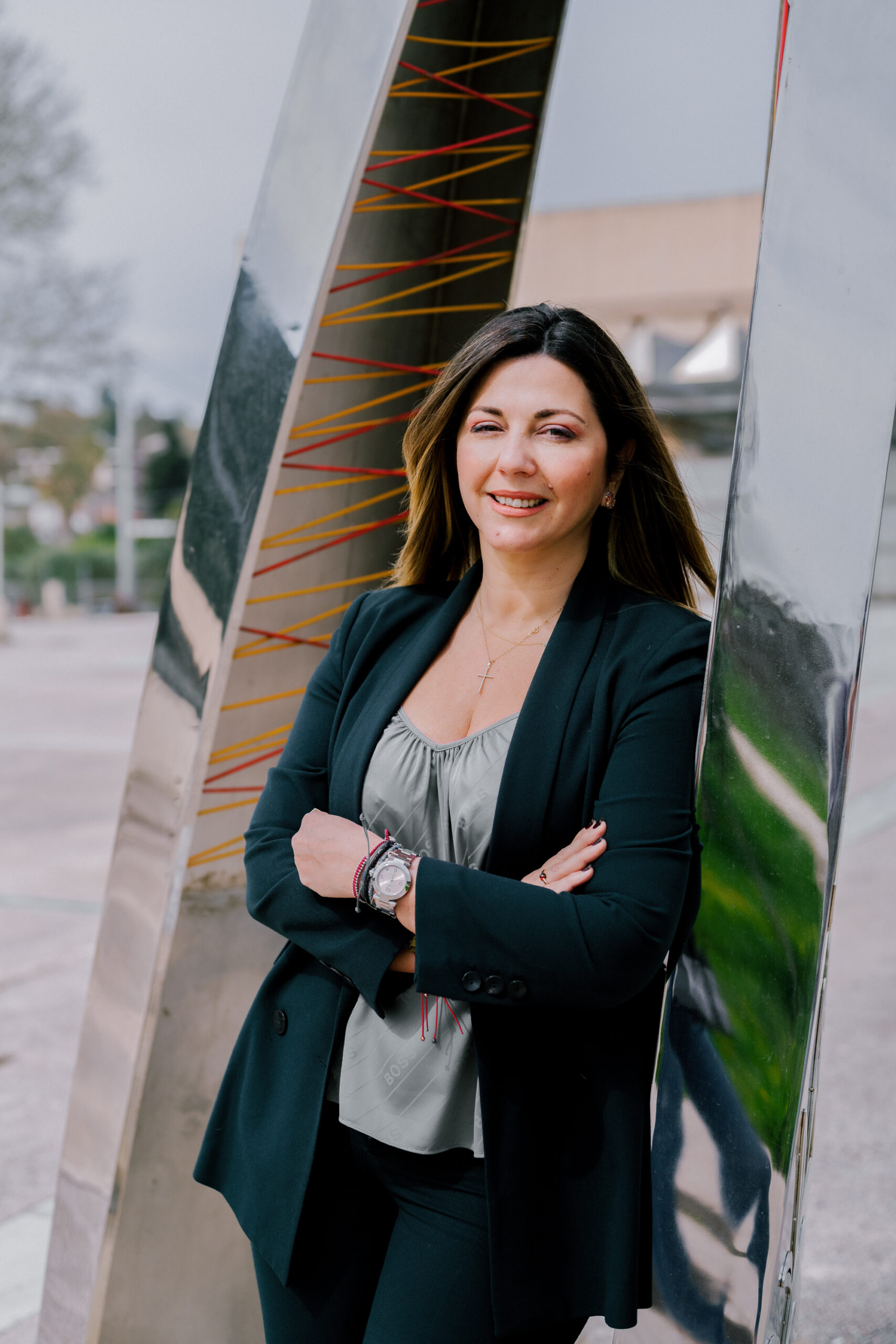
Interview of the Minister of Social Cohesion and Family, Mrs Sofia Zacharakis to Panagiota Surtzi
A non-discriminatory society with equal opportunities for all
the Minister of Social Cohesion and Family, Ms Sophia Zacharaki ,
describing in grtraveller
the policies and actions that the new ministry will undertake in this direction.

You have taken over the new ministry which, according to the Prime Minister, includes policies that concern all citizens of the country. Tell us a little bit about the object and its objectives.
The Ministry of Social Cohesion and Family was created in order for the State to focus for the first time on specific issues that concern a wide range of the social fabric of our country.
For this reason, three General Secretariats have been created under its umbrella, with the main objective of promoting social solidarity, combating poverty, addressing the demographic issue, developing an integrated housing policy, promoting gender equality and protecting social groups that suffer discrimination.
“…in the Greek society of the future, discrimination
will be a thing of the past and every citizen will enjoy equal opportunities.”
On our agenda are important reforms for the independent living of persons with disabilities, the effective strengthening of the core of the family, the protection of women from violence and harassment, the creation of incentives for the advancement of the new generation, ensuring equal treatment at work, the promotion of national policies for LGBTQ+ equality and the National Strategy for Roma Inclusion. We want to develop a national strategy for the most important challenge we face – demography. Our goal is to be the “shelter” for every weak citizen who needs us.
What are the main challenges that the ministry is called upon to meet in the immediate future?
There are currently many vulnerable citizens who feel that they are not receiving the proper care from the State. This sentiment stems from challenges such as income inequality, the dominance of work over family life, the demographic issue and the ageing population, barriers to women’s employment, as well as violence and abuse against women. Discrimination is well entrenched within society and still today it continues to divide people. It is our duty to respond with productive policies, treating all citizens fairly.
Let’s look at some of these challenges. What actions will the Ministry take to address the demographic issue and especially to support large families?
Another challenge of great national importance that we have to face is the demographic problem. For this reason and with the newly established General Secretariat and by joining forces with local government and social actors, we will prepare an analytical
At the same time, with the implementation of innovative housing programmes, the continued support of working parents through increased leave, the care for every family with the measures already legislated in the first bill of the new government, the creation of care units for infants and toddlers within medium and large enterprises, the implementation of the “Neighbourhood Nannies” programme and the strategy for assisted reproduction, the strategy for long-term care, I am optimistic that we can chart a pioneering demographic strategy for the future.
“Kindergartens” in businesses. How do you think a programme to create baby-care facilities within medium and large enterprises can work positively?
The creation of baby-care facilities in businesses, an action with a European dimension, is another response to the issue of balancing family and professional life, as well as to the obstacles to women’s employment. Using the resources from the Recovery Fund, we will provide financial support to medium and large businesses for the creation of childcare facilities for infants and toddlers from 6 months to 2.5 years of age within their premises, as well as subsidise the salary costs of the childminders for the smooth operation of the programme. We will carry out a proper assessment of the businesses that can join the programme. In addition to benefiting employees, we are also enabling businesses to offer quality and modern benefits to their workforce and I am confident that more and more will respond to this innovative project.
Is the generation gap an issue that the new ministry will address? If so, how could it be bridged?
Our Ministry will not leave any social group out of its targets. We seek on the one hand to provide as many incentives as possible for the younger generation to invest their personal and professional success in our country, and on the other hand to support policies to promote healthy and active ageing. We can promote the active participation of older citizens in all aspects of society, while raising awareness among younger generations of the value of cultivating the principles of solidarity, justice and equality between generations. We want to build a truly democratic society, where young and old have equal opportunities and are equal actors in social action. In this way, the intergenerational link will also be achieved.
What is your vision for the evolution of Greek society?
Our vision is to shape the conditions so that in the Greek society of the future, discrimination will be a thing of the past and every citizen will enjoy equal opportunities. At the heart of our concern is the future of our country, the young generation and the family, but also all vulnerable social groups. No one is left out of our protection.