




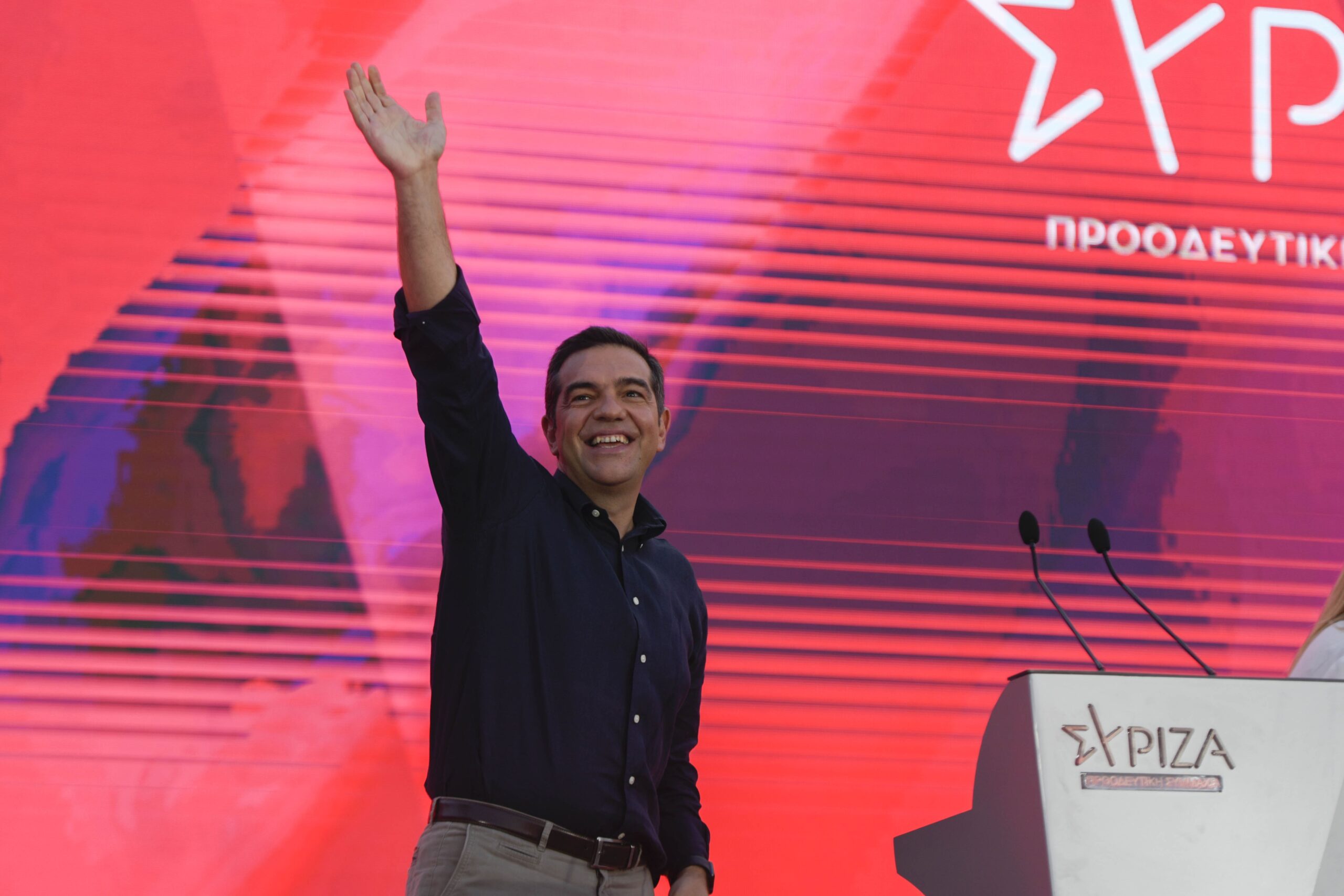
Interview with the Leader of the Official Opposition and President of SYRIZA – Progressive Alliance, Mr. Alexis Tsipras on grtraveller
In view of the elections expected in 2023, the Leader of the Official Opposition and President of SYRIZA – Progressive Alliance, Mr. Alexis Tsipras speaks to grtraveller, criticising the current government and analysing his party’s plan to organise the country’s future “with seriousness, security and justice”.
Mr President, what is the answer to the citizen who looks you in the eye and asks “Why SYRIZA – Progressive Alliance, why Alexis Tsipras”?
You know, politics is not a matter of words and proclamations but of people’s experiences. What the vast majority of citizens have experienced over the last three years and what they see happening today, from their income, their security, the prospects of their children to the state of our institutions and our democracy itself, all contribute to the obvious conclusion that things have to change. So the victory of SYRIZA in the next elections is the first key in this process. So the first step is political change. The one that will allow us firstly, to face the consequences of a disastrous governance of the South-West and secondly, will enable us to organise the future with seriousness, security and justice. It is now clear that we are in a period of historic challenges and the world is changing at a rapid pace. From geopolitical turbulence, to the climate crisis and the explosion of social inequalities, the issues on which we must strategise as a country and as a society are many and extremely important. Therefore, a strong progressive government that understands the burden of responsibility towards society and at the same time has the knowledge and experience to respond to the new conditions in a completely different way from the same short-sighted and dogmatic way in which the conservative party and its party-state governs every time it takes over the governance of the country.
What will be the dilemma of the next national elections?
The dilemma is between democracy and the regime. I am not referring to something theoretical or deeply ideological. I am talking about the core of the two concepts and practices that characterize the two major political factions in the country today. If you put in order the most important moments of the current government’s term of office, you will see clearly the confrontation between these two concepts, in fact between these two worlds. Great achievements of democratic society, such as the NHS, social security and public education, have been targeted for dismantling. What replaces them? The direct assignments of 7.5 billion to day labourers, the robbery of public funds to cover the hole from the privatisation of supplementary insurance, the exclusion of tens of thousands of students from universities to become the clientele of dubious colleges supported by the government. In the energy sector the same? Instead of the largest public utility, the PPC, being today the safety valve for the country against the energy crisis and the guarantee for citizens against the waves of obscenity, the PPC is being privatized and at the same time its golden boys are generously sharing state money with the bonuses they distribute among themselves. Of course, all of the above was illuminated in the most glaring way by the revelations about the wiretapping scandal. In other words, it was revealed that this regime practice, which marginalized the social majority with all the strategic decisions of the current government, has come to devalue and threaten even the basic principles of the institutional order and the democratic constitution. In short, this case showed that the miserable policies implemented in the country were directly linked to the miserable practices that led to their enforcement. So today, our strategic choice as a society cannot be other than democracy not only as a value but also as a means to improve the lives of the citizens of this country.
“…every young person has already understood the meaning of the next elections
because quite simply their own experiences
have led them to think about it and work it out.”
What message do you want to give to young people ahead of the upcoming elections?
I am not of the opinion that one should explain the importance of the upcoming elections to young people and young people. I am also of the opinion that the problem with the younger generations is not that they are apathetic, not involved, not interested. These views are theoretical and communicative constructs of those who fear the opinion and free expression of young people.
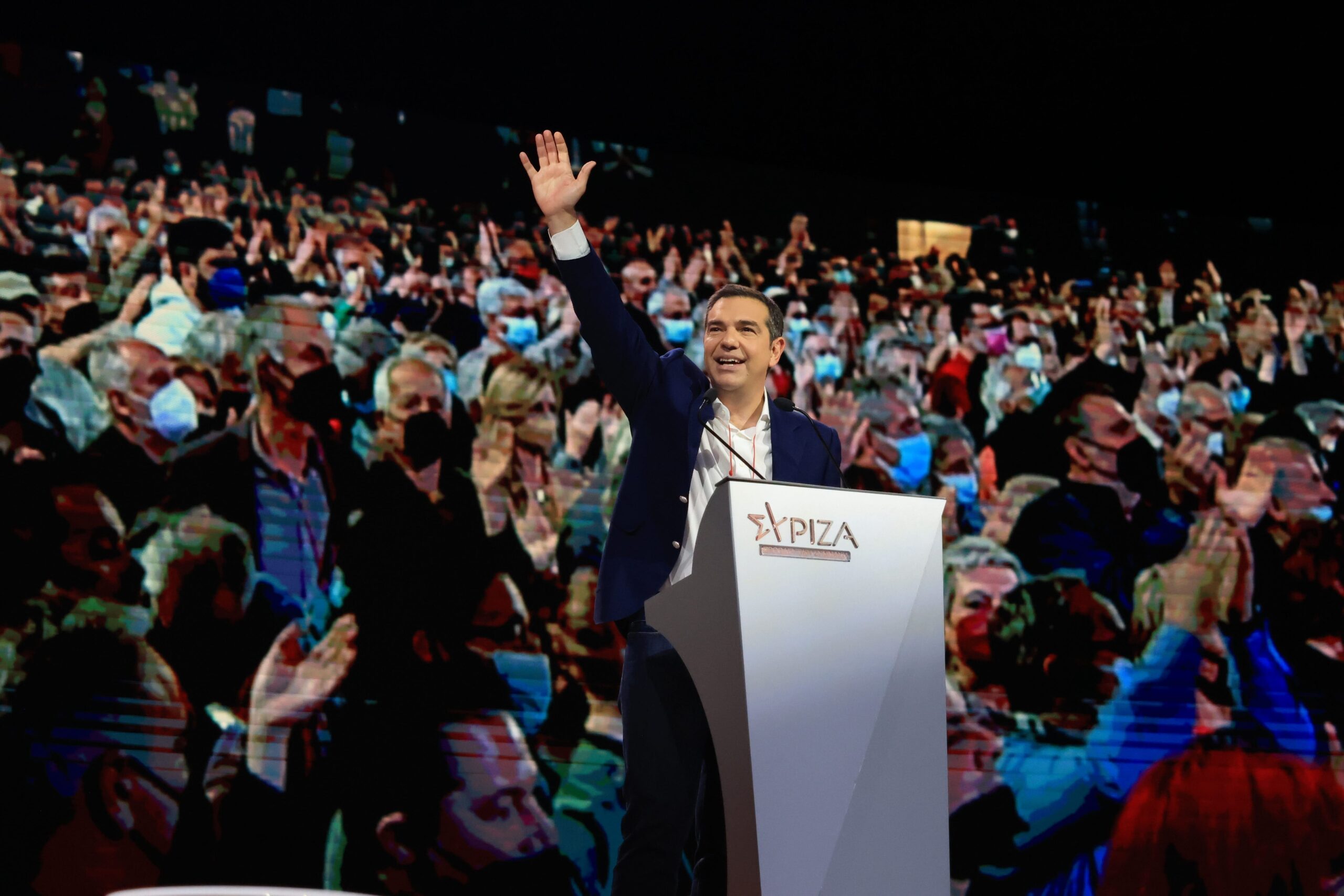
In this sense, I think that every young person has already understood the meaning of the next elections because their own experiences have led them to think about it and to work it out. They have grown up in crisis Greece, experienced the Greece of the pandemic and today they are struggling to stand in a Greece of extreme inequalities, deregulation of labour, devaluation of public education and the explosion of the housing crisis. So it’s clear that the answer to who is responsible for all of this, they know very well. And the recent political history of our country has shown that when the critical moment comes, young people always make their decision with a view to a more just and secure future for their own generation and for the next.
Which areas need immediate action?
I will focus on those who must intervene from the very next day so that the positive impact on the life of every citizen can be seen. The first is to tackle the energy crisis by drastically reducing bills through structural reforms and reducing the cost of fuel and food. The second is the strategy to increase disposable income and fairer taxation for employees, pensioners, traders and self-employed. The third is to support the welfare state by regaining employment and restoring the 8-hour working day, a new strong NHS and a new solid foundation for public education and social policy for the disabled.
All of the above constitute a set of priorities for exactly the time horizon you have described. Directly. We know very well that the damage that has been caused to the living standards of the great majority and, consequently, to social cohesion is so extensive that the government’s work from day one must be elaborated, targeted and immediately applicable. Our proposals therefore meet all three of these conditions.
What will you do to boost citizens’ net income?
We have a comprehensive plan of structural interventions. Substantive interventions, not aspirin. Starting with the reduction of the excise duty on fuels (oil, petrol, gasoline, natural gas) to the lowest rate in the EU and the abolition of the excise duty on agricultural oil. At the same time, we reduce VAT on foodstuffs to the lowest rate, 6%. These are loss-reducing interventions. But we also need an income support strategy. By raising the minimum wage by law to 800 euros, introducing an indexation mechanism on an annual basis for private and public sector wages. For pensioners, the priority is the return of retroactive payments in three annual instalments and the reinstatement of the 13th pension, which we reinstated in 2019. Finally, we have specific priorities in terms of tax fairness, the most important of which are the abolition of the business tax and the increase of the tax-free threshold to 10,000 euros for employees, pensioners, farmers, freelancers, scientists, traders and block workers.
How do you comment on the Government’s measures on accuracy?
Unfortunately, the government’s only measures for accuracy are those that strengthen it, not those that limit it. It is now clear that the Greek society is living the consequences of Mitsotakis’s inexactness. There is no longer the excuse of international turbulence. Of course they affected us as a country but they don’t explain why we found ourselves with the highest energy inflation in Europe. They don’t explain why we now have the most expensive petrol in the whole of Europe. Someone gave us these sad firsts. It is the same prime minister and his government who are celebrating the increase in indirect tax revenues when he has not reduced either VAT or the VAT. In other words, they celebrate the fact that the state, instead of putting a stop to obscenity, participates itself in this bleeding of income. At the same time, it has not yet received a single euro from the taxation of the super-profits of energy companies, which amount to 2.2 billion. It is obvious, therefore, that the current government has decided to be the protector of the cartels, completely ignoring the consequences for households and businesses.
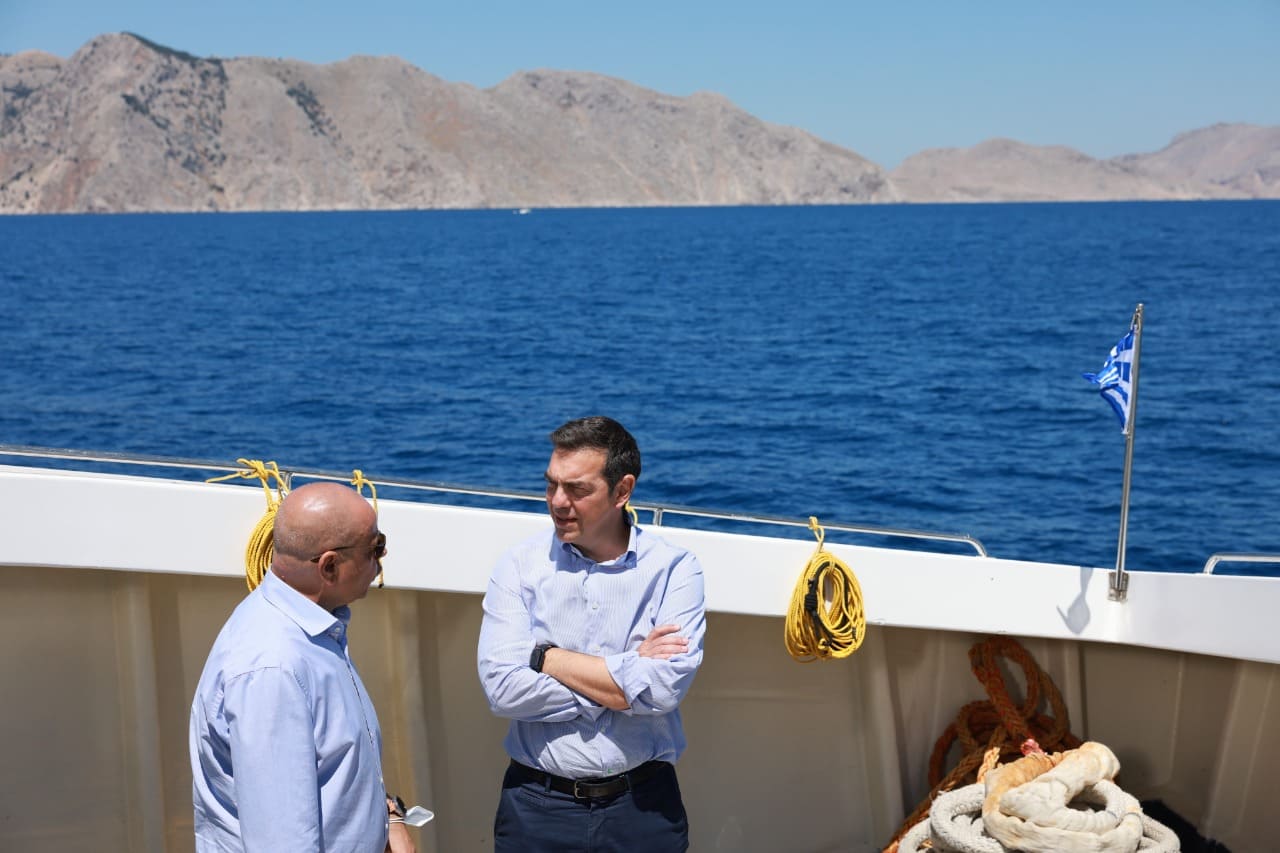
Many Greeks have found themselves unable to pay insurance and tax contributions, resulting in multiple fines. What is the next day for them?
We are talking about an explosive problem that has been made even bigger by the unacceptable bankruptcy law of the current government, which now puts the homes and property of the people you mentioned at risk. Our strategy to address the problem includes a permanent framework of debt settlements to the wider public sector (tax authorities, social security funds, municipalities, etc.), in order to provide realistic and sustainable solutions for citizens. It is not possible to deal with the problem indefinitely with ad hoc schemes, while it is obvious that the current schemes of 12 and 24 instalments are proving to be completely ineffective in practice and lead people, quite simply, to lose the arrangements at some point. Our plan therefore includes fixed arrangements combined with incentives and benefits, but also with safeguards to ensure less bureaucracy and better coordination of the services involved. However, especially for debts incurred since the pandemic period, for debts to social security funds and the tax authorities, our programme provides for a regulation with a haircut on the basic debt and repayment of the balance in 120 instalments, following the model of the scheme implemented by the SYRIZA government in 2019 for debts to social security funds. All of the above is of course also governed by the basic safeguard, which we will reiterate, which is the protection of the first home.
With what policies will you support farmers?
I think again we need to see some actions that need to be taken immediately. Such as the non-payment of excise duty on agricultural oil as I said before and, at the same time, the substantial subsidy support in the purchase of animal feed for farmers, the substantial subsidy support in the purchase of fertilizers for farmers. Now, other structural changes are needed in the context of upgrading the agricultural sector as a node in an overall process of changing the production model. Actions such as the reform of ELGA, targeted financial programmes and microcredit are part of this logic. We should also give the perspective for Young Farmers to stay in the countryside to produce, as well as invest in the possibility of energy communities, and grid connection for farmers to produce the electricity they consume on the land they cultivate. There should also be a more comprehensive plan for cultivating land that is fallow with subsidies for production factors without losing the subsidies of the fallowing programme, as well as special programmes to support production in the island country and in mountainous areas, due to the excessive production costs. In any case, the strategy for the agricultural sector starts from the fact that we have to realize that the Greek economy cannot have a model of sustainable development if the production model we have is based exclusively on the tertiary sector, tourism, services and the production of medium and low value-added products.
“… the issues on which we must strategise as a country
and as a society are many and extremely important.”
What changes would you support to improve the health sector in our country?
Society today needs a strong and effective NHS more than ever. For this reason, we have been outlining for over a year the plan for the New NHS that will meet the needs of society and the times. Our ambition at the end of four years of progressive governance is to reach the European average level in terms of health and prevention services.
By increasing the funding of the NHS by 2 billion. euros from the state budget and an additional one billion euros from the resources of the Recovery Fund. And with a view to approaching the European average in health spending, which is currently 7% of GDP, over four years. With the restructuring of the salary scale for medical staff, in order to combat the brain drain and with an introductory salary for the first doctor at 2,000 euros and a similar adjustment for the other grades.
With the establishment of a mechanism for the automatic advertisement and filling of vacancies in the NHS, due to retirement and the permanent employment in the NHS of all health personnel who fought the battle of the pandemic, which is also a moral obligation.
By recruiting, as we plan, 5,000 permanent health workers immediately and another 10,000 over a three-year horizon in cutting-edge sectors, but also in services that the NHS has been lagging behind to date. In Community Care, Emergency Medicine, Rehabilitation, Mental Health, Dental Care, Post-Hospital Care.
By including health workers in the heavy and unhealthy status and by strengthening primary care by tripling the number of the health centres that we established in difficult conditions. From the 127 currently operating to 380 across the country, consolidating the institution of the family doctor throughout the country and for all citizens.
“…government work from day one
must be pre-treated,
targeted and directly applicable.”
How do you assess the government’s policy on Greek-Turkish relations?
The criticism we have made is that the country has not taken advantage of important opportunities. On the occasion of Biden’s election, I spoke at the time about the need for an active diplomacy initiative on the part of Greece to link Greek-Turkish relations with a positive agenda in Euro-Turkish affairs. This proposal was made very simply because it is this strategy that upgrades the country’s position and not the logic of the extras, passively waiting for developments. The government took no initiative whatsoever and we are still paying for this inactive attitude today. On the contrary, at that time Mr. Mitsotakis chose to leave diplomacy and enter the arms game. However, the issue here is not for Greece to enter a new arms race, but what is the overall strategy in the context of an active foreign policy towards an unpredictable neighbour. But regardless of the political situation in the country, Mr. Erdoğan must know that in the face of his provocation he does not have a weak and outgoing prime minister, but the entire Greek people.
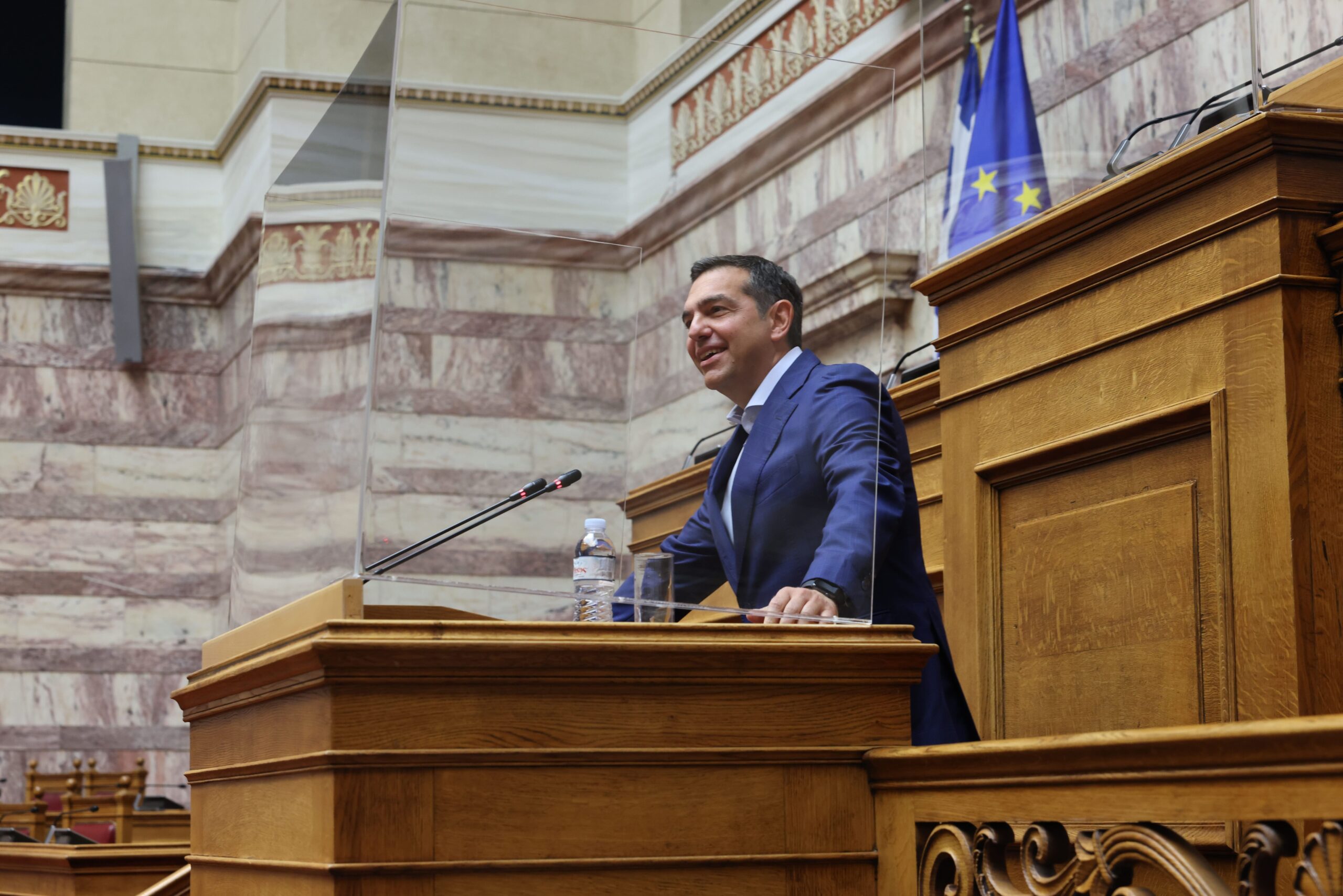
“A government of cooperation of progressive forces”. Political realism or electoral narrative?
In fact, it is the only realistic plan for the country’s regeneration. One thing is a given today. With the current government and its conservative dogmatism, things can only get worse. The way out, therefore, lies on the other side of the political spectrum. This, if you like, is the lesson of recent international experience. We have seen how states, often regardless of whether or not their governments were identified with the progressive area, have found no other way to keep their economies and social cohesion intact than to take actions that emanate from progressive ideas. Support for public health systems, state regulatory intervention in the market to curb price and obscenity, nationalisation of the energy sector, interventions to boost disposable income. What is happening all the time in Europe and America is our programme, our progressive strategy for a modern, fair and European Greece. Those who see themselves and their values in this strategy have no choice but to invest in and support such a perspective, which will be implemented by a strong progressive government.