






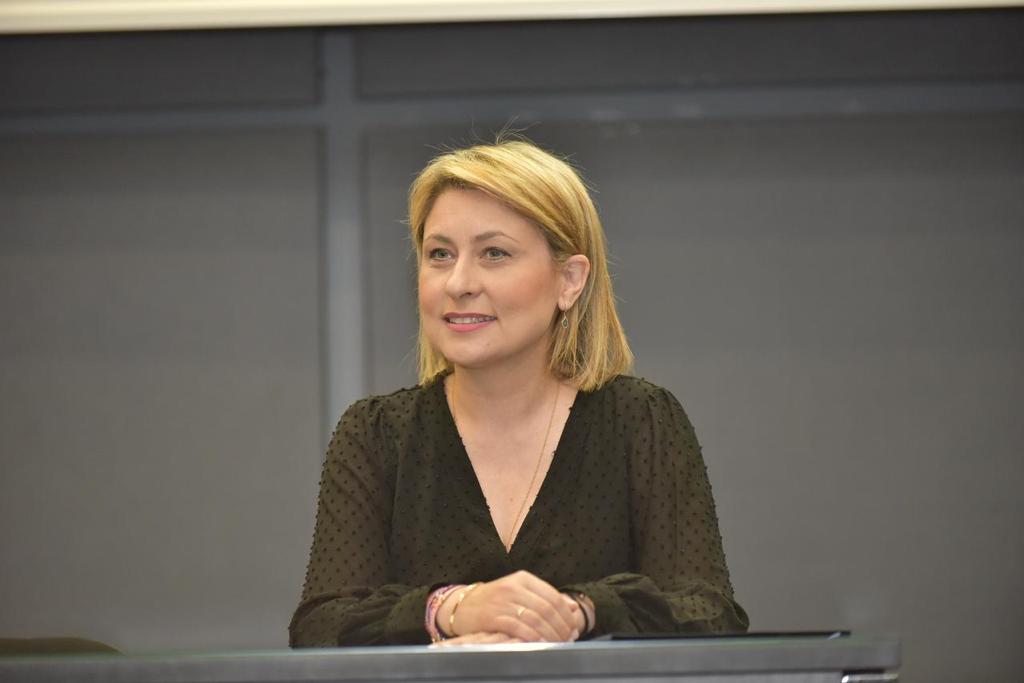
Interview of the Deputy Minister of Infrastructure and Transport, Ms Christina Alexopoulou to Panagiota Surtzi
For the Ministry’s plans to make urban public transport more user and environmentally friendly as well as a series of actions concerning the modernization and digitalization of public transport, as well as the improvement of road safety, talks to grtraveller the Deputy Minister Mrs. Christina Alexopoulou, stressing how the aim is to achieve a better quality of life for the citizen.
Mrs Alexopoulou, you have taken up the post of Deputy Minister MThe Commission has already a rich political and parliamentary background. Tell us about your journey and the goals you have set while serving in your current position?
Prime Minister Kyriakos Mitsotakis honoured me by entrusting me with the Transport sector, a critical and at the same time very useful sector, both for the national economy and for the Greek society as a whole.
Of course I want to thank the people of Achaia who trusted me for the second time with their honorary vote of confidence. It is our duty to offer the citizen the best quality of life.
The aim is to change the culture through Transport and through mass “green” transport to make public transport friendly and selective.
If public transport is easy to use, safe and fast, people will use it, they will leave the car behind, thus relieving congestion in large urban centres.
I recognise the importance of this portfolio and the needs of citizens who look forward to an improved, growing and safer daily life in their transport.
After all, the modern politician is called upon to undertake difficult projects and to adapt quickly to new environments, offering substantial and productive solutions.
What do you think are the main challenges you face as Deputy Minister of State for Infrastructure and Transport? What are the ministry’s priorities and actions for the next 4 years?
The transport sector has serious challenges. Our will is clear. Greek public transport and its services must be worthy, if not superior, to European quality and reliability.
As the Prime Minister has said, we must become Europe in everything. First and foremost because they concern the safety of citizens. It must be made clear how the Greek government will take significant steps in this direction.
Our priority is to strengthen electromobility. Already, we have moved to accelerate the completion of applications for thousands of grant beneficiaries and are preparing the next programme of support in our country.
Of course, it is a big challenge to properly manage and find new resources for the renewal, maintenance and expansion of the existing fleet. We are already gradually changing the picture. We provide incentives for the renewal of urban and intercity bus services. We also check the quality of existing transport services. We are working to improve the technical competence of vehicles in circulation.
Therefore, we have made it a priority to automate and ensure the quality of MOT inspections, which, in the medium term, will enhance road safety and reduce the environmental footprint of the fleet.
We are updating the National Strategic Road Safety Plan – “Greece 2030”, which, among other things, aims to reduce the number of road accident victims by 50% by 2030.
We are already working on proposals for the new Road Safety Law, improvements to the Highway Code, the National Road Safety Observatory and the National Road Safety Communication Policy.
Digital transformation is also a priority. We are using Information and Communication Technologies to digitise dozens of processes and services, which inconvenience both citizens and employees. We invest in digital extroversion.
At the same time, green footprint strategies have already been launched and will continue to be implemented. We must protect the environment in every way we can. Whether this involves legislative initiatives or the necessary and effective supervision.
What is the importance of long-distance transport and what infrastructure are you planning as a ministry to facilitate their work? What, in your opinion, should be the role of intercity transport in tourism and how could it help to increase the movement of tourists and excursionists within the country?
We recognise the very important role of the transport project, both at urban and interurban level, a particularly critical sector. Long-distance transport links the major urban centres with each other and with the wider regional units.
The Ministry’s aim is to support the upgrading of services. Firstly, for the better and safer service of Greek citizens and subsequently for the strengthening of Greek tourism.
What kind of measures is the ministry planning for greener road transport?
Our Ministry supports the development of green infrastructure and transport, as Minister Christos Staikouras has stressed.
We are renewing the public transport fleet in Athens and Thessaloniki with 1,300 new buses with anti-pollution technology.
In addition, a typical example to mention is the support for the “green taxi” programme. We have recorded the relevant requests of professional drivers, we have assessed them, and we are in the process of preparing the necessary legislative initiatives to implement a significant number of them.
Protecting the environment is at the top of our priorities.
From which places you have visited in Greece do you have the most beautiful memories?
I am a mountain man. I love forests, mountains and clean oxygen. It is in these landscapes that I feel that I recharge my batteries. My great weakness is Chelmos, and in particular the beautiful Zarochla in mountainous Achaia. I have great memories with my daughter, my family and our friends spending our holidays there.
What is your vision for Greece in the next four years?
As a member of the government of Kyriakos Mitsotakis, I share the Prime Minister’s vision of a Greece that at the end of the four-year term will offer a better quality and more comfortable life to its citizens, worthy of advanced European countries.
I also look forward to a modern and efficient State at the service of the whole.
I believe in a harmonious cooperation between citizens and the State through digitised procedures, without hassles, bureaucracy and delays.
We have laid the foundations and we will continue to implement work with a great impact on everyday life and on transport.