







Calcutta, note. Kolkata, is the magnificent capital of British rule in India. When the British settled in the area, on 17th century, they found three villages on the banks of the Hoogly River – a tributary of the Ganges -, identified their prime location for maritime communication and trade development, and built a fortress, Fort William, laying the foundations for the future development of the city. The amalgamation of the three villages created Calcutta, whose advantageous position made it a famous port and then a centre of British colonialism until 1911, when the capital of India was moved to Delhi.
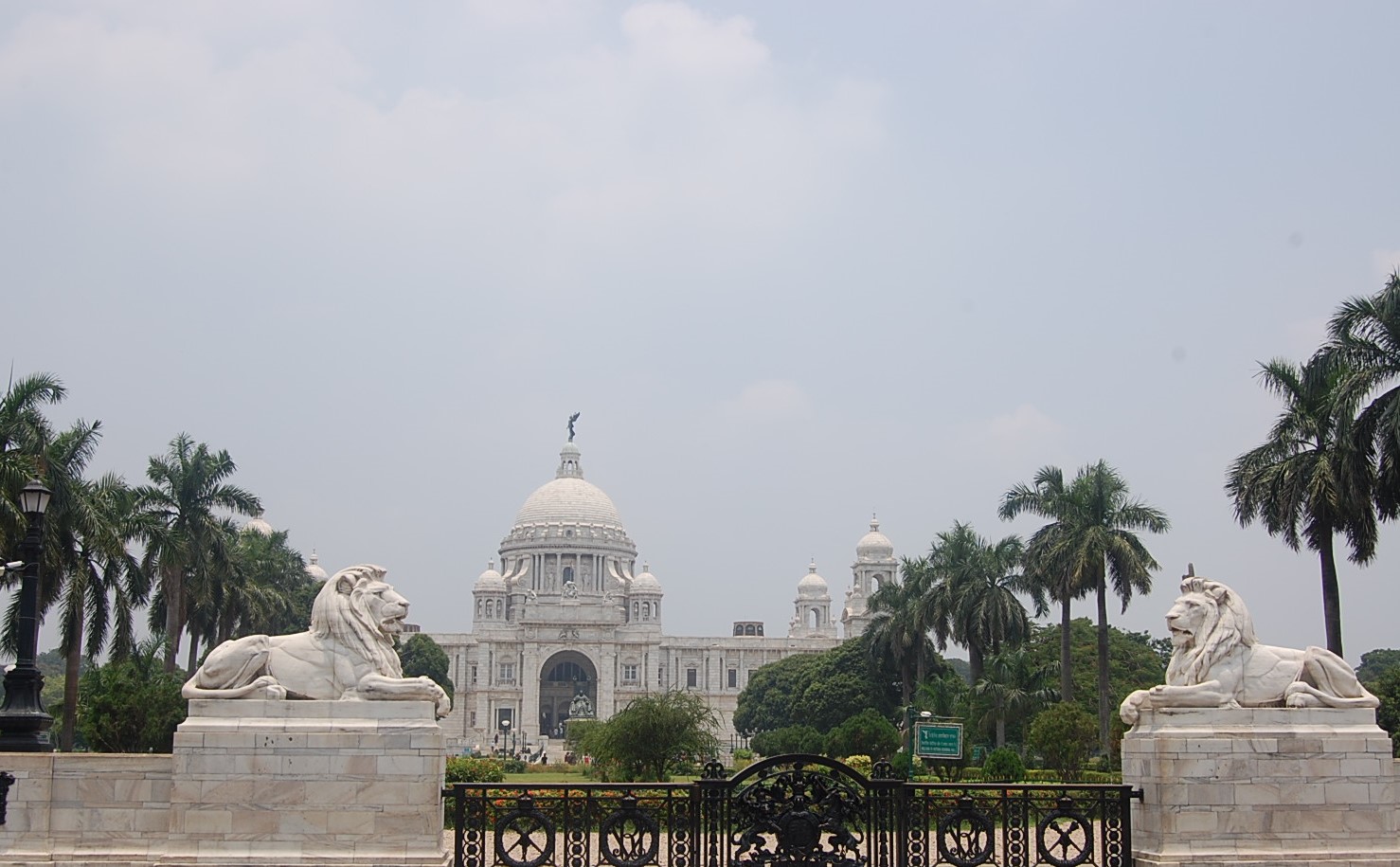
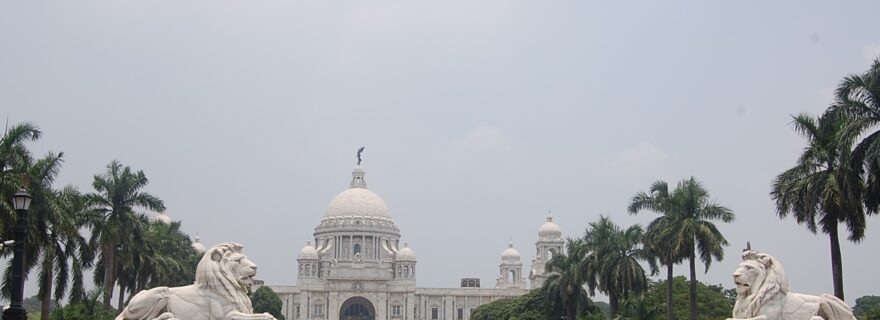
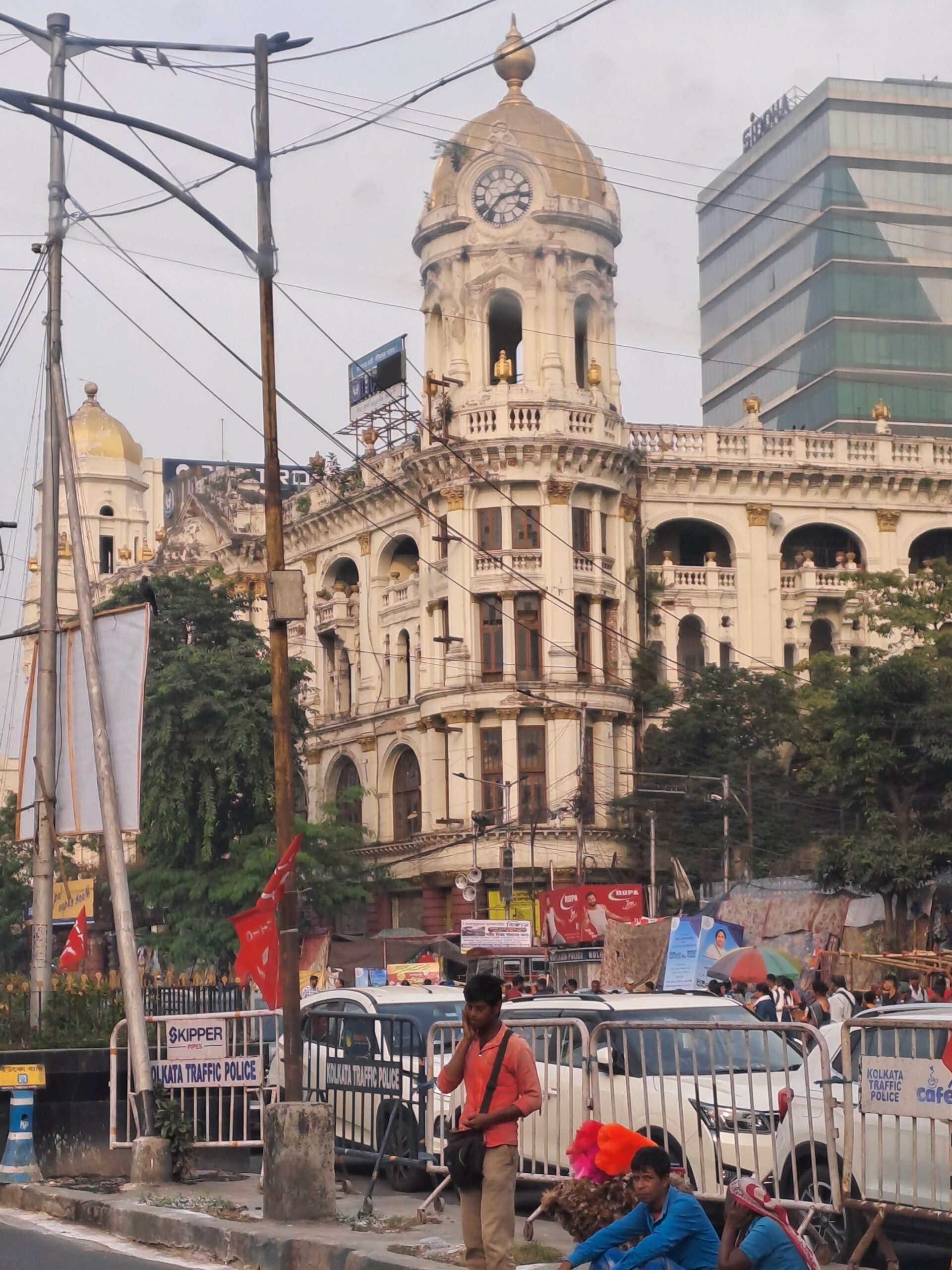
The traces of the British are evident to this day, with the impressive Queen Victoria Monument, St Paul’s Cathedral, the central railway station, the Howrah Bridge, and many other colonial-style buildings, which despite the wear and tear and dust, convey the splendour and wealth of the British era. Calcutta, which developed mainly in the 19th, with the influx of population from all over India, is now a megalopolis with its twenty or so million inhabitants, moving relentlessly on the roads, on motorbikes, on buses, on risk, etc. In central parts of the city, along with the large buildings and apartment blocks, small shops are crowded on the sidewalk offering all kinds of services, from food to haircuts. Kolkata is an interesting travel destination, with its Victorian buildings, its impressive temples of many religions – among which the temple of the goddess Kali, in Dakineshwar, stands out -, its museums, its bustling markets, its colourful festivals.


In Calcutta one will find, in a central point, the Greek Orthodox church of the Transfiguration of the Saviour, a remnant of the era when the Greek community flourished. The history of the Greeks in Calcutta dates back to the mid-18th century and is associated with commercial activities. Towards the end of the 18th century and the beginning of the 19th century, the Greek community was going through a great period of prosperity, and needed a school and a church, essential for the functioning of a community abroad. The school teaches Greek letters to Greek children with great teachers, such as Dimitrios Galanos (1760-1833), who lived in India for 30 years, studied Indian philosophy and died in Benares, the holy city of the Indo-Aryans, leaving his estate to the National and Kapodistrian University of Athens.
The first Greek church was built in 1782 and dedicated to the Transfiguration of the Saviour. The growth of the Greek community – in terms of members and wealth – leads to the construction of a new church, which is inaugurated in 1924 and is also dedicated to the Transfiguration of the Saviour. After World War II, however, the Greek community began to decline and the last Greeks left in 1961. For about 30 years, the magnificent church of the Transfiguration, which is built with Doric columns, probably to remind the Greeks of their homeland, was the only remnant (along with the Greek cemetery) of the flourishing Greek presence.
Since 1991 the church started to function again thanks to the efforts of a Greek monk, Fr. Ignatius Senni, who settled in Calcutta and set up a small structure to care for the numerous needs of the people living in the area. Today, Fr. Ignatius now lives in Madagascar, being the local bishop there, but his work continues with the organization of local Indian Christians in an NGO called “Charitable Organization of the Orthodox Church”. A little further out, 10 km from the centre of Calcutta, in Bakeshwar, is the building complex of the Orthodox Church which includes the main administration building, the girls’ hostel, the old school which is being renovated, and the new school “St. Ignatius” which is the jewel of the area. The soul of this complex is the nun Nektaria Paradisi, who runs the school, takes care of the girls of the hostel and carries out any administrative or other work that is necessary for the operation of this place. The new school was inaugurated and started operating in 2019, offering high quality education to children from the wider region.
In the same area is the girls’ hostel, which houses over 100 girls of various ages, from three to twenty years old, offering food, shelter, education and entertainment to girls from a family torn apart by death, illness or simply poverty. Sister Nectaria, who cares for these girls as if they were her own children, struggles with the scarce financial means at her disposal to ensure that her children, as she calls them, do not miss anything, from the simplest things, such as pocket money for a school trip, to covering the costs of their education, which often goes as far as university.
The building of the old school, according to the intentions of Sister Nectaria, is intended to serve as a College for the training of teachers. Thus, on the one hand it will offer the girls hosted in the hostel the opportunity to continue their studies, if they are interested in this field, and on the other hand it will be able to function as a nursery for teachers to cover the needs of the school “Agios Ignatios”. The Greek presence in Kolkata, though tenuous, today continues its dynamic path in the local Indian society.